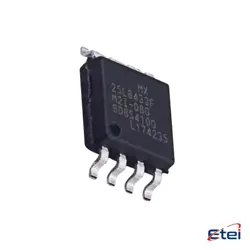
Hình ảnh chỉ để tham khảo
4N35M
+BOMOPTOISO 5KV TRANS W/BASE 6-DIP
-
Nhà sản xuấtEverlight Electronics Co Ltd
-
Ông. Phần #4N35M
-
Bảng dữ liệu 4N35M DataSheet
-
Có sẵn13897
365 Đảm bảo chất lượng ngày
7*24 giờ dịch vụ quarantee
90-Bảo hành sau bán hàng ngày
Bảo hành sản phẩm chính xác
Thông số kỹ thuật
| thuộc tính | Giá trị |
| Part Status | Active |
| Number of Channels | 1 |
| Voltage - Isolation | 5000Vrms |
| Current Transfer Ratio (Min) | 100% @ 10mA |
| Turn On / Turn Off Time (Typ) | 10µs, 9µs |
| Input Type | DC |
| Output Type | Transistor with Base |
| Voltage - Output (Max) | 80V |
| Voltage - Forward (Vf) (Typ) | 1.2V |
| Current - DC Forward (If) (Max) | 60 mA |
| Vce Saturation (Max) | 300mV |
| Operating Temperature | -55°C ~ 110°C |
| Mounting Type | Through Hole |
| Package / Case | 6-DIP (0.400", 10.16mm) |
| Supplier Device Package | 6-DIP |
Tổng quan
Description
Equivalent
1. PC817 - Another widely used optocoupler with similar characteristics.
2. LTV817 - An optocoupler with comparable specifications.
3. EL817 - A suitable alternative offering similar functionality.
4. CNY17 - Another compatible optocoupler option.
5. TLP521 - Toshiba's equivalent for similar applications.
These alternatives can generally be used interchangeably depending on specific circuit requirements.
Features
1. Phototransistor Output: It includes a phototransistor that receives the optical signal and converts it back to an electrical signal.
2. Isolation Voltage: Offers a high isolation voltage, typically around 5,000 Vrms, which makes it suitable for separating different electrical circuits to prevent high voltages from affecting the system receiving the signal.
3. Current Transfer Ratio (CTR): The CTR specifies the efficiency of the signal transfer, with typical values around 100-600%.
4. Input LED: Contains an internal LED that emits infrared light when powered, which is detected by the phototransistor.
5. Compact Package: Usually available in a compact 6-pin or 4-pin DIP package, making it easy to integrate into circuits.
6. Applications: Commonly used in applications like signal isolation, interfacing, switching, and noise reduction in circuits.
These features make the 4N35M suitable for various applications where electrical isolation and signal integrity are crucial.
Pinout
1. Pin 1 (Anode): Connects to the positive side of the input signal; it's where the current enters the LED inside the optocoupler.
2. Pin 2 (Cathode): Connects to the negative side of the input signal; it's where the current exits the LED.
3. Pin 3 (NC - No Connection): Not connected internally and typically left unconnected.
4. Pin 4 (Emitter): The emitter of the internal phototransistor; typically connected to the ground or negative side of the output circuit.
5. Pin 5 (Collector): The collector of the internal phototransistor; it outputs the phototransistor current to the external circuit.
6. Pin 6 (Base): This pin is sometimes used to adjust the phototransistor's sensitivity or speed.
The function of the 4N35M is to electrically isolate different sections of a circuit while allowing a signal to pass between them via light emitted by the internal LED and detected by the phototransistor.
Manufacturer
Vishay Intertechnology is an American company known for producing a wide range of discrete semiconductors and passive electronic components. It was founded in 1962 and operates globally, serving sectors such as automotive, industrial, consumer, telecommunications, and military.
Texas Instruments (TI) is another major manufacturer of the 4N35M. TI is a renowned American technology company that designs and manufactures semiconductors and various integrated circuits, which it sells to electronics designers and manufacturers globally. It was founded in 1930 and is well-known for its development of analog technology, embedded processing, and digital signal processing.
Both companies are significant players in the electronics industry, providing crucial components for various applications, from consumer electronics to industrial and automotive systems.
Application
1. Microcontroller Interfacing: Isolates microcontrollers from high-voltage circuits.
2. Switching Power Supplies: Provides isolation between primary and secondary circuits.
3. Signal Isolation: Protects sensitive electronics by isolating signal lines.
4. Data Communications: Used in communication interfaces to prevent ground loops.
5. Industrial Automation: Ensures safe signal transfer in PLCs and motor controllers.
6. Telecommunications: Isolates components in telephony circuits to prevent interference.
7. Medical Equipment: Protects patient-connected devices by isolating high voltages.