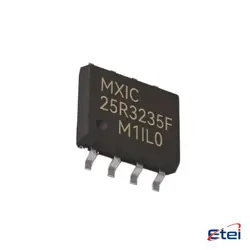
Hình ảnh chỉ để tham khảo
ATMEGA2560V-8CU
+BOMIC MCU 8BIT 256KB FLASH 100CBGA
-
Nhà sản xuấtCông nghệ Microchip
-
Ông. Phần #ATMEGA2560V-8CU
-
Bảng dữ liệu ATMEGA2560V-8CU DataSheet
-
Gói TFBGA-100
-
Có sẵn3873
365 Đảm bảo chất lượng ngày
7*24 giờ dịch vụ quarantee
90-Bảo hành sau bán hàng ngày
Bảo hành sản phẩm chính xác
Thông số kỹ thuật
| thuộc tính | Giá trị |
| Package | Tray |
| Series | AVR® ATmega |
| ProductStatus | Active |
| CoreProcessor | AVR |
| CoreSize | 8-Bit |
| Speed | 8MHz |
| Connectivity | EBI/EMI, I²C, SPI, UART/USART |
| Peripherals | Brown-out Detect/Reset, POR, PWM, WDT |
| NumberofI/O | 86 |
| ProgramMemorySize | 256KB (128K x 16) |
| ProgramMemoryType | FLASH |
| EEPROMSize | 4K x 8 |
| RAMSize | 8K x 8 |
| Voltage-Supply(Vcc/Vdd) | 1.8V ~ 5.5V |
| DataConverters | A/D 16x10b |
| OscillatorType | Internal |
| OperatingTemperature | -40°C ~ 85°C (TA) |
| MountingType | Surface Mount |
| Package/Case | 100-TFBGA |
Tổng quan
Description
The ATMEGA2560V-8CU includes numerous peripherals such as 86 general-purpose I/O pins, four USARTs for serial communication, SPI and I2C interfaces, timers, PWM outputs, and a 10-bit ADC. It supports a wide range of power supply voltages from 1.8V to 5.5V, enhancing its versatility. The device is often used in applications like robotics, industrial control systems, and embedded systems, where real-time performance is crucial. Its compact 100-pin TQFP or VQFN package makes it suitable for space-constrained applications, providing developers flexibility and extensive functionality.
Equivalent
1. Microchip's ATMEGA2560-16AU: Offers similar features and pin compatibility.
2. ATMEGA1280 series: Offers fewer features but similar architecture.
3. Microchip's PIC series like PIC18 or PIC32, though architecture differs.
4. STM32F103 series: ARM Cortex-M3 based, offers similar functionalities with different architecture.
5. NXP's LPC1768: ARM Cortex-M3, similar feature set.
These alternatives may differ in architecture, power consumption, and peripherals. Always verify specific requirements before selection.
Features
1. Core Architecture: Based on the AVR enhanced RISC architecture, it executes instructions in a single clock cycle, achieving throughput of 1 MIPS per MHz.
2. Memory:
- 256KB of In-System Programmable Flash with Read-While-Write capabilities.
- 8KB of SRAM.
- 4KB of EEPROM.
3. Operating Voltage: 1.8V to 5.5V, suitable for low-power applications.
4. Speed: Operates up to 8 MHz at 2.7V to 5.5V and up to 4 MHz at 1.8V to 2.7V.
5. I/O and Peripherals:
- 86 programmable I/O lines.
- 16-channel 10-bit ADC.
- 4 USART, 2 I2C, and 4 SPI interfaces.
- 4 timers/counters (two 8-bit, two 16-bit).
- 4 programmable PWM outputs.
6. Enhanced Features: JTAG interface for on-chip debugging, real-time counter, and watchdog timer.
7. Power Consumption: Optimized for low power with multiple sleep modes.
This combination of features makes the ATMEGA2560V-8CU highly suitable for a wide range of embedded applications.
Pinout
Pin Count:
- 100 pins in a VQFN package.
Key Functions:
- CPU: 8-bit AVR RISC architecture.
- Memory: 256 KB of Flash memory, 8 KB of SRAM, 4 KB of EEPROM.
- I/O Ports: 86 programmable I/O lines.
- Timers/Counters: 6 timers (four 16-bit and two 8-bit).
- Communication Interfaces:
- 4 USARTs (Universal Synchronous/Asynchronous Receiver/Transmitters)
- 2 SPI (Serial Peripheral Interface) ports
- 1 I²C-compatible Two-Wire Interface (TWI)
- PWM Channels: 14 PWM channels
- ADC: 16-channel 10-bit ADC
- Other Features: Watchdog timer, programmable serial USART, and JTAG for debugging.
These features make the ATmega2560V-8CU suitable for complex applications requiring substantial I/O capabilities and communication options.
Manufacturer
Application
1. Embedded Systems: Used in robotics, automation, and control systems for its processing power and extensive I/O capabilities.
2. Prototyping and Development: Popular in Arduino Mega boards for rapid prototyping and educational purposes.
3. Consumer Electronics: Employed in smart devices, home automation, and wearables.
4. Industrial Automation: Utilized in data logging, control panels, and sensor management.
5. Automotive: Applied in vehicle control systems and diagnostics.
Its versatility and performance make it suitable for both complex and simple embedded solutions.