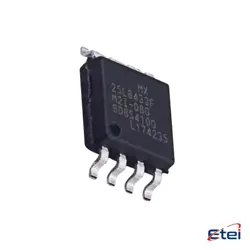
Hình ảnh chỉ để tham khảo
ATMEGA328PB-AU
+BOMIC MCU 8BIT 32KB FLASH 32TQFP
-
Nhà sản xuấtCông nghệ Microchip
-
Ông. Phần #ATMEGA328PB-AU
-
Bảng dữ liệu ATMEGA328PB-AU DataSheet
-
Gói TQFP-32
-
Có sẵn3144
365 Đảm bảo chất lượng ngày
7*24 giờ dịch vụ quarantee
90-Bảo hành sau bán hàng ngày
Bảo hành sản phẩm chính xác
Thông số kỹ thuật
| thuộc tính | Giá trị |
| Package | Tray |
| Series | AVR® ATmega, Functional Safety (FuSa) |
| ProductStatus | Active |
| CoreProcessor | AVR |
| CoreSize | 8-Bit |
| Speed | 20MHz |
| Connectivity | I²C, SPI, UART/USART |
| Peripherals | Brown-out Detect/Reset, POR, PWM, WDT |
| NumberofI/O | 27 |
| ProgramMemorySize | 32KB (16K x 16) |
| ProgramMemoryType | FLASH |
| EEPROMSize | 1K x 8 |
| RAMSize | 2K x 8 |
| Voltage-Supply(Vcc/Vdd) | 1.8V ~ 5.5V |
| DataConverters | A/D 8x10b |
| OscillatorType | Internal |
| OperatingTemperature | -40°C ~ 85°C (TA) |
| MountingType | Surface Mount |
| Package/Case | 32-TQFP |
Tổng quan
Description
Key improvements over the ATmega328P:
- Two UARTs (vs. one) for better serial communication.
- Two I²C (TWI) interfaces for enhanced peripheral connectivity.
- Additional timers (4x 16-bit, 1x 8-bit) for precise control.
- More GPIOs (up to 28 vs. 23) and extra peripherals like a configurable custom logic (CCL) block.
It retains Arduino compatibility (used in boards like Uno) and operates at 1.8V–5.5V, making it versatile for embedded projects. The -AU suffix denotes a TQFP-32 package, ideal for surface-mount applications.
Ideal for: IoT, automation, robotics, and DIY electronics requiring extra serial interfaces or I/O flexibility.
Equivalent
- ATMEGA328P-AU (similar but lacks some peripherals like extra USART).
- ATMEGA328PB-AUR (same specs, tape & reel packaging).
- ATMEGA168PB-AU (lower flash but similar features).
- ATMEGA328-AU (older variant, fewer features).
- PIC18F45K22 (Microchip alternative, different architecture).
- STM32F030F4P6 (ARM-based, more powerful but different pinout).
For drop-in replacements, ATMEGA328PB-AUR or ATMEGA328P-AU are closest.
Features
- 8-bit AVR RISC core (20 MHz max)
- 32KB Flash, 2KB SRAM, 1KB EEPROM
- Two USARTs (vs. one in ATmega328P)
- Two I²C (TWI) interfaces
- Two SPI interfaces
- Enhanced 16-bit Timer/Counter1 (extra PWM outputs)
- Four 16-bit timers (vs. three in ATmega328P)
- 26 programmable I/O pins
- 12-channel 10-bit ADC
- Differential ADC with PGA (Programmable Gain Amplifier)
- Hardware-based LIN/UART support
- Wide voltage range: 1.8V–5.5V
- Low-power sleep modes
Ideal for embedded systems requiring extra peripherals and communication interfaces.
Pinout
- 32 I/O Pins: All support digital I/O, with many offering alternate functions.
- Analog Pins: 8-channel 10-bit ADC.
- Communication: 2x USART, SPI, I²C (TWI).
- Timers: Three 8-bit and one 16-bit timer.
- PWM: 6 outputs.
- Enhanced Features (vs. ATMEGA328P): Additional USART, SPI, and LIN support.
- Clock Speed: Up to 20MHz.
Commonly used in Arduino-compatible projects and embedded systems.
Application
- Consumer Electronics: Smart home devices, remote controls.
- Industrial Automation: Sensors, motor control, PLCs.
- Automotive: Dashboard controls, basic ECUs.
- IoT Devices: Wearables, wireless sensors.
- DIY & Hobby Projects: Arduino-compatible boards (e.g., custom PCBs).
- Robotics: Small robot controllers.
- Medical Devices: Basic monitoring systems.
Its enhanced peripherals (extra UART, timers) make it ideal for cost-sensitive, low-power applications requiring moderate processing.