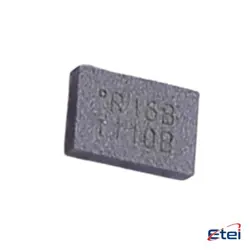
Hình ảnh chỉ để tham khảo
ATMEGA88-20AU
+BOMIC MCU 8BIT 8KB FLASH 32TQFP
-
Nhà sản xuấtcủa Atmel
-
Ông. Phần #ATMEGA88-20AU
-
Bảng dữ liệu ATMEGA88-20AU DataSheet
-
Gói QFP32
-
Có sẵn4424
365 Đảm bảo chất lượng ngày
7*24 giờ dịch vụ quarantee
90-Bảo hành sau bán hàng ngày
Bảo hành sản phẩm chính xác
Thông số kỹ thuật
| thuộc tính | Giá trị |
| Package | Bulk |
| Series | AVR® ATmega |
| ProductStatus | Active |
| CoreProcessor | AVR |
| CoreSize | 8-Bit |
| Speed | 20MHz |
| Connectivity | I²C, SPI, UART/USART |
| Peripherals | Brown-out Detect/Reset, POR, PWM, WDT |
| NumberofI/O | 23 |
| ProgramMemorySize | 8KB (4K x 16) |
| ProgramMemoryType | FLASH |
| EEPROMSize | 512 x 8 |
| RAMSize | 1K x 8 |
| Voltage-Supply(Vcc/Vdd) | 2.7V ~ 5.5V |
| DataConverters | A/D 8x10b |
| OscillatorType | Internal |
| OperatingTemperature | -40°C ~ 85°C (TA) |
| MountingType | Surface Mount |
| Package/Case | 32-TQFP |
Tổng quan
Description
Key features include a 10-bit ADC, two 8-bit and one 16-bit timer/counters, and a rich set of peripherals like SPI, I2C, and USART for communication. It supports both 5V and 3.3V environments, making it adaptable for various power supply systems. The ATMEGA88-20AU also includes a watchdog timer, power-on reset, and various sleep modes for low-power applications, enhancing power efficiency.
Its compact TQFP-32 package and robust functionalities make it ideal for embedded applications such as consumer electronics, automotive systems, and industrial automation. The ATMEGA88-20AU is commonly used in projects requiring reliable and efficient control with minimal power consumption.
Equivalent
1. ATMEGA88PA-AU: A pin and performance equivalent with lower power consumption.
2. ATMEGA48-20AU: Offers lower memory, pin compatible.
3. ATMEGA168-20AU: Higher memory, same pinout.
4. PIC16F876A: 8-bit microcontroller from Microchip's PIC family, similar capabilities.
Always check datasheets for specific compatibility in terms of pin configuration and peripheral features.
Features
1. CPU: 8-bit AVR RISC architecture with 130 powerful instructions.
2. Clock Speed: Operates up to 20 MHz.
3. Memory:
- 8KB Flash memory for program storage.
- 1KB SRAM for volatile data.
- 512B EEPROM for non-volatile data retention.
4. I/O Pins: 23 general-purpose I/O pins.
5. Peripherals:
- Two 8-bit Timer/Counters with separate prescaler, one 16-bit Timer/Counter.
- 6 PWM channels for precise control tasks.
- 10-bit ADC with up to 8 channels for analog-to-digital conversion.
- USART, SPI, and I2C interfaces for communication.
6. Power Consumption: Low power consumption with various sleep modes.
7. Operating Voltage: 1.8V to 5.5V.
8. Package: Available in a 32-lead TQFP package.
These features make the ATMEGA88-20AU suitable for a wide range of applications, from simple control systems to complex communication and processing tasks.
Pinout
1. I/O Ports: Multiple General Purpose I/O Ports (PORTB, PORTC, PORTD) for interfacing with external devices.
2. Power Supply: VCC and GND pins for power supply connections.
3. Oscillator Pins: XTAL1 and XTAL2 for connecting an external clock source.
4. Reset Pin: RESET for external reset.
5. Analog Pins: ADC inputs for the 10-bit analog-to-digital converter.
6. Communication Interfaces:
- SPI (Serial Peripheral Interface)
- I2C (Two-Wire Interface)
- USART (Universal Synchronous/Asynchronous Receiver/Transmitter)
7. Timers: Pins associated with internal timers/counters.
8. PWM Outputs: For pulse-width modulation.
The ATMEGA88-20AU is widely used for various applications, including embedded systems, due to its versatile pin functions and robust features.
Manufacturer
Application
1. Embedded Systems: Ideal for controlling simple to moderately complex systems.
2. Consumer Electronics: Used in gadgets, remote controls, and appliances.
3. Automotive: Suitable for dashboard instruments and control modules.
4. Industrial Automation: Helps in process control and monitoring.
5. IoT Devices: Powers smart home devices and wearable technology.
6. Robotics: Used in motor control and sensor integration.
7. Medical Devices: Supports portable medical equipment.
8. Education: Commonly used in learning kits and prototyping.
Its ease of programming and robust features make it a popular choice across these domains.