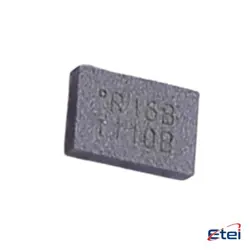
Hình ảnh chỉ để tham khảo
CMP402GSZ
+BOMIC COMPARATOR LV 65NS 16-SOIC
-
Nhà sản xuấtCông ty Analog Devices Inc.
-
Ông. Phần #CMP402GSZ
-
Bảng dữ liệu CMP402GSZ DataSheet
-
Gói SOP-16
-
Có sẵn2127
365 Đảm bảo chất lượng ngày
7*24 giờ dịch vụ quarantee
90-Bảo hành sau bán hàng ngày
Bảo hành sản phẩm chính xác
Thông số kỹ thuật
| thuộc tính | Giá trị |
| Package / Case | Bulk,Tube |
| Part Status | Active |
| Type | General Purpose |
| Number of Elements | 4 |
| Output Type | CMOS, TTL |
| Voltage - Supply, Single/Dual (±) | ±5V |
| Voltage - Input Offset (Max) | 3mV @ 5V |
| Current - Input Bias(Max) | 3µA @ 5V |
| Current - Quiescent (Max) | 1.2mA, 1mA |
| CMRRPSRR(Typ) | 60dB CMRR, 60dB PSRR |
| Propagation Delay(Max) | 75ns |
| Hysteresis | 2mV |
| Operating Temperature | -40°C ~ 125°C |
| Mounting Type | Surface Mount |
Tổng quan
Description
The curriculum may cover various programming paradigms, efficient algorithm design, and analysis, as well as the use of advanced data structures such as graphs, trees, and hash tables. Students might also explore contemporary software engineering practices like version control, testing, and debugging.
Prerequisites usually include foundational courses in computer science, ensuring students have a solid grasp of basic programming and algorithmic principles. By the end of CMP402GSZ, students are expected to demonstrate improved coding proficiency, the ability to tackle complex computational problems, and readiness for more specialized or professional roles in software development. This course is often integral for those pursuing careers in software engineering, data analysis, or systems architecture.
Equivalent
1. AD8676 from Analog Devices
2. OPA227 from Texas Instruments
3. LT1001 from Analog Devices (formerly Linear Technology)
4. MC34071 from ON Semiconductor
These alternatives should be evaluated for matching specific parameters such as voltage range, bandwidth, and input offset voltage to ensure suitability.
Pinout
Manufacturer
Application
1. Semiconductor Fabrication: Essential for the planarization of wafer surfaces to ensure uniform layer deposition and precise photolithography.
2. Microelectronics: Used in creating integrated circuits by smoothing and flattening interlayer dielectrics and metal layers.
3. Wafer Thinning: Helps in achieving desired wafer thickness for advanced packaging technologies.
4. Optoelectronic Devices: Ensures surface uniformity for efficient light transmission and performance.
5. MEMS and NEMS: Utilized in the fabrication of micro-electromechanical and nano-electromechanical systems for achieving surface planarity and structural integrity.