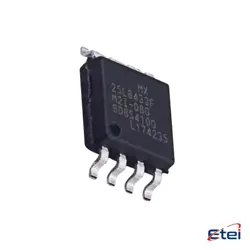
Hình ảnh chỉ để tham khảo
EPM3032ATC44-10
+BOMIC CPLD 32MC 10NS 44TQFP
-
Nhà sản xuấtAltera
-
Ông. Phần #EPM3032ATC44-10
-
Bảng dữ liệu EPM3032ATC44-10 DataSheet
-
Có sẵn7203
365 Đảm bảo chất lượng ngày
7*24 giờ dịch vụ quarantee
90-Bảo hành sau bán hàng ngày
Bảo hành sản phẩm chính xác
Thông số kỹ thuật
| thuộc tính | Giá trị |
| Series | MAX® 3000A |
| Part Status | Obsolete |
| Digi Key Programmable | Verified |
| Programmable Type | In System Programmable |
| Delay Time tpd(1) Max | 10 ns |
| Voltage Supply - Internal | 3V ~ 3.6V |
| Number of Logic Elements / Blocks | 2 |
| Number of Macrocells | 32 |
| Number of I/O | 34 |
| Operating Temperature | 0°C ~ 70°C (TA) |
| Mounting Type | Surface Mount |
| Package / Case | 44-TQFP |
| Supplier Device Package | 44-TQFP (10x10) |
| Base Product Number | EPM3032 |
| Number of Gates | 600 |
Tổng quan
Description
Key features include:
1. Logic Cells: It contains 32 macro cells, allowing the implementation of various digital logic functions.
2. Speed Grade: The "-10" indicates a maximum operating speed of 10 ns, suitable for high-speed applications.
3. Configuration: It can be programmed using hardware description languages like VHDL or Verilog.
4. I/O Pins: The device offers multiple input/output pins, configurable for various voltage levels and functions.
5. Applications: Commonly used in digital circuit design, including embedded systems, communication devices, and control systems.
Overall, the EPM3032ATC44-10 provides a balance of performance and programmability, making it ideal for custom digital logic solutions.
Equivalent
Features
1. Architecture: It employs a CMOS technology with a user-configurable architecture, offering flexibility in design.
2. Logic Cells: Contains 32 macrocells, allowing for complex logic functions.
3. Programmable Interconnect: The device features a fully programmable interconnect, enabling designers to create customized connections between logic elements.
4. I/O Pins: Offers up to 44 input/output pins, supporting a variety of digital signal levels.
5. Speed: Operates with a maximum speed of 10 ns, suitable for high-speed applications.
6. Low Power Consumption: Designed for efficiency, making it suitable for battery-operated devices.
7. Development Tools: Compatible with a range of software development tools for design compilation and simulation.
8. Applications: Ideal for diverse applications including embedded systems, telecommunications, and consumer electronics.
This device provides a balance of performance, flexibility, and power efficiency for various digital designs.
Pinout
The primary functions of the EPM3032ATC44-10 include:
1. Logic Implementation: It can be used to implement complex combinational and sequential logic functions.
2. Input/Output Configuration: It supports various I/O standards and can be configured for different voltage levels.
3. Programmability: Users can program the device using the Altera design software to create custom logic solutions.
4. Interfacing: It supports interfacing with other digital components and systems.
Overall, the EPM3032ATC44-10 is suited for a variety of applications in digital circuit design, prototyping, and embedded systems.
Manufacturer
Founded in 1968, Intel has evolved into a significant player in the computing and electronics industry, providing solutions for data centers, personal computing, and the Internet of Things (IoT). The company is recognized for its innovation in processing technology and has expanded its portfolio to include memory, storage, and programmable logic devices.
Intel’s programmable logic devices, like the EPM3032ATC44-10, cater to various applications, including digital signal processing, consumer electronics, automotive, and industrial automation, allowing engineers to create customized hardware solutions. As a major entity in the semiconductor sector, Intel continues to drive advancements in technology and applications across multiple industries.
Application
1. Digital Circuit Design: For creating custom digital logic circuits.
2. Embedded Systems: As part of microcontroller and FPGA-based systems for specific control functions.
3. Signal Processing: In applications requiring data manipulation and processing.
4. Communications: Used in routing and protocol handling in communication systems.
5. Industrial Automation: For controlling machinery and automation processes.
6. Consumer Electronics: In devices requiring custom logic configurations.
Its versatility allows for rapid prototyping and implementation of complex logic functions in various electronic applications.