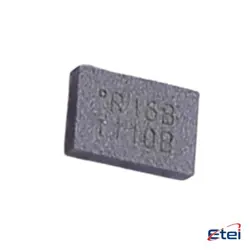
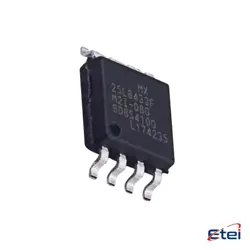
Hình ảnh chỉ để tham khảo
GD25Q16CTIG
+BOMIC FLASH 16MBIT SPI/QUAD 8SOP
-
Nhà sản xuấtGigaDevice Semiconductor (HK) Limited
-
Ông. Phần #GD25Q16CTIG
-
Có sẵn1237
365 Đảm bảo chất lượng ngày
7*24 giờ dịch vụ quarantee
90-Bảo hành sau bán hàng ngày
Bảo hành sản phẩm chính xác
Thông số kỹ thuật
| thuộc tính | Giá trị |
| Package | Tube |
| ProductStatus | Not For New Designs |
| MemoryType | Non-Volatile |
| MemoryFormat | FLASH |
| Technology | FLASH - NOR |
| MemorySize | 16Mb (2M x 8) |
| MemoryInterface | SPI - Quad I/O |
| ClockFrequency | 120 MHz |
| WriteCycleTime-WordPage | 50µs, 2.4ms |
| Voltage-Supply | 2.7V ~ 3.6V |
| OperatingTemperature | -40°C ~ 85°C (TA) |
| MountingType | Surface Mount |
| Package/Case | 8-SOIC (0.154, 3.90mm Width) |
Tổng quan
Description
The GD25Q16CTIG is a serial NOR Flash memory device, commonly used in embedded systems for data storage. With a storage capacity of 16 Mbit (2 MB), it features a Serial Peripheral Interface (SPI) for communication, ensuring efficient data transfer and minimal pin count. This device is highly suitable for applications requiring reliable and fast read/write operations due to its support for standard, dual, and quad SPI modes.
Key features of the GD25Q16CTIG include its wide operating voltage range (2.7V to 3.6V), low power consumption, and high endurance with up to 100,000 program/erase cycles. It offers a fast read speed up to 104 MHz in fast read mode, making it ideal for high-performance applications. The device also includes security features like block protection and a write-protect pin.
Typically packaged in an 8-pin SOIC, the GD25Q16CTIG is designed for use in consumer electronics, industrial control, and other applications requiring non-volatile memory storage. Its compact size and versatility make it a popular choice in a variety of electronic devices.
Key features of the GD25Q16CTIG include its wide operating voltage range (2.7V to 3.6V), low power consumption, and high endurance with up to 100,000 program/erase cycles. It offers a fast read speed up to 104 MHz in fast read mode, making it ideal for high-performance applications. The device also includes security features like block protection and a write-protect pin.
Typically packaged in an 8-pin SOIC, the GD25Q16CTIG is designed for use in consumer electronics, industrial control, and other applications requiring non-volatile memory storage. Its compact size and versatility make it a popular choice in a variety of electronic devices.
Equivalent
The GD25Q16CTIG is a 16 Mbit (2 MB) SPI NOR Flash memory chip by GigaDevice. Equivalent products include:
1. W25Q16JVSSIQ by Winbond
2. MX25L1606EM1I-12G by Macronix
3. AT25SF161B-SSHD-B by Adesto Technologies
4. S25FL116K by Cypress (now part of Infineon Technologies)
These chips typically offer similar voltage and temperature ranges, capacity, and SPI interface, making them suitable substitutes for applications requiring a 16 Mbit SPI Flash memory chip.
1. W25Q16JVSSIQ by Winbond
2. MX25L1606EM1I-12G by Macronix
3. AT25SF161B-SSHD-B by Adesto Technologies
4. S25FL116K by Cypress (now part of Infineon Technologies)
These chips typically offer similar voltage and temperature ranges, capacity, and SPI interface, making them suitable substitutes for applications requiring a 16 Mbit SPI Flash memory chip.
Features
The GD25Q16CTIG is a 16 Mbit (2 MB) serial Flash memory chip produced by GigaDevice and is part of the GD25Q series. Key features include:
1. Interface: It operates with a SPI (Serial Peripheral Interface) which supports dual/quad I/O for higher efficiency.
2. Performance: The device offers fast read speeds up to 104 MHz and supports Dual/Quad I/O data transfer, enhancing data throughput.
3. Memory Organization: The memory is organized into 2048 sectors of 4 KB each, and 32 blocks of 64 KB each.
4. Supply Voltage: The chip operates on a wide range of supply voltage from 2.7V to 3.6V.
5. Erase/Program: Supports byte programming, sector, and block erasing, as well as a full chip erase.
6. Endurance: It provides a minimum of 100,000 program/erase cycles per sector and over 20 years of data retention.
7. Security: Features security registers for data protection and a write protection mechanism for critical data.
This device is suitable for embedded systems requiring reliable and efficient non-volatile memory storage.
1. Interface: It operates with a SPI (Serial Peripheral Interface) which supports dual/quad I/O for higher efficiency.
2. Performance: The device offers fast read speeds up to 104 MHz and supports Dual/Quad I/O data transfer, enhancing data throughput.
3. Memory Organization: The memory is organized into 2048 sectors of 4 KB each, and 32 blocks of 64 KB each.
4. Supply Voltage: The chip operates on a wide range of supply voltage from 2.7V to 3.6V.
5. Erase/Program: Supports byte programming, sector, and block erasing, as well as a full chip erase.
6. Endurance: It provides a minimum of 100,000 program/erase cycles per sector and over 20 years of data retention.
7. Security: Features security registers for data protection and a write protection mechanism for critical data.
This device is suitable for embedded systems requiring reliable and efficient non-volatile memory storage.
Pinout
The GD25Q16CTIG is a 16 Mbit (2 MB) serial NOR Flash memory chip from GigaDevice. It typically comes in an 8-pin package. Here is a brief overview of its pin configuration and functions:
1. CS# (Chip Select): This pin activates the chip. It's active low, meaning the chip is selected when this pin is low.
2. DO (Data Out): Used for outputting data during read operations.
3. WP# (Write Protect): Provides hardware protection for the status register and memory contents. Active low.
4. VSS (Ground): This is the power ground pin.
5. DI (Data In): Used for inputting commands, addresses, or data.
6. CLK (Clock): Supplies the clock signal for data transfers.
7. HOLD#: Pauses any serial communication with the device without losing data. Active low.
8. VCC: Supplies the power for the chip operation.
The GD25Q16CTIG supports various features like fast read, dual output, and page program, making it suitable for a wide range of applications that require reliable non-volatile memory storage.
1. CS# (Chip Select): This pin activates the chip. It's active low, meaning the chip is selected when this pin is low.
2. DO (Data Out): Used for outputting data during read operations.
3. WP# (Write Protect): Provides hardware protection for the status register and memory contents. Active low.
4. VSS (Ground): This is the power ground pin.
5. DI (Data In): Used for inputting commands, addresses, or data.
6. CLK (Clock): Supplies the clock signal for data transfers.
7. HOLD#: Pauses any serial communication with the device without losing data. Active low.
8. VCC: Supplies the power for the chip operation.
The GD25Q16CTIG supports various features like fast read, dual output, and page program, making it suitable for a wide range of applications that require reliable non-volatile memory storage.
Manufacturer
The GD25Q16CTIG is manufactured by GigaDevice Semiconductor Inc. GigaDevice is a Chinese company specializing in the design and manufacture of semiconductor products. They are known for their NOR Flash, NAND Flash, and microcontroller units (MCUs). GigaDevice is a significant player in the non-volatile memory market and provides products commonly used in electronics, including consumer electronics, industrial applications, and computer peripherals.
Application
The GD25Q16CTIG is a 16 Mbit serial flash memory chip commonly used in various applications. Key application areas include:
1. Consumer Electronics: Used in TVs, set-top boxes, and gaming consoles for firmware storage.
2. Industrial Equipment: Employed in control systems and automation devices for reliable data storage.
3. Networking Devices: Utilized in routers and switches for configuration data.
4. Automotive Systems: Applied in infotainment systems and dashboards for software storage.
5. IoT Devices: Integrated into sensors and smart devices for firmware and data logging.
6. Computing Devices: Used in laptops and desktops for BIOS storage.
These applications leverage the chip’s non-volatile memory, fast read/write capabilities, and small form factor.
1. Consumer Electronics: Used in TVs, set-top boxes, and gaming consoles for firmware storage.
2. Industrial Equipment: Employed in control systems and automation devices for reliable data storage.
3. Networking Devices: Utilized in routers and switches for configuration data.
4. Automotive Systems: Applied in infotainment systems and dashboards for software storage.
5. IoT Devices: Integrated into sensors and smart devices for firmware and data logging.
6. Computing Devices: Used in laptops and desktops for BIOS storage.
These applications leverage the chip’s non-volatile memory, fast read/write capabilities, and small form factor.
Package
The GD25Q16CTIG is a 16 Mbit (2M x 8) Serial Flash Memory device commonly available in an 8-pin SOP (Small Outline Package) format. This type of package is compact and suitable for surface mounting on printed circuit boards, making it ideal for applications requiring reliable and space-efficient memory solutions.