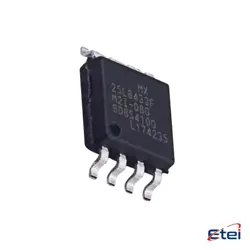
Hình ảnh chỉ để tham khảo
H11AA1SR2M
+BOMOPTOISO 4.17KV TRANS W/BASE 6SMD
-
Nhà sản xuấtonsemi
-
Ông. Phần #H11AA1SR2M
-
Bảng dữ liệu H11AA1SR2M DataSheet
-
Có sẵn26707
365 Đảm bảo chất lượng ngày
7*24 giờ dịch vụ quarantee
90-Bảo hành sau bán hàng ngày
Bảo hành sản phẩm chính xác
Thông số kỹ thuật
| thuộc tính | Giá trị |
| Part Status | Active |
| Number of Channels | 1 |
| Voltage - Isolation | 4170Vrms |
| Current Transfer Ratio (Min) | 20% @ 10mA |
| Input Type | AC, DC |
| Output Type | Transistor with Base |
| Voltage - Output (Max) | 30V |
| Current - Output / Channel | 50mA |
| Voltage - Forward (Vf) (Typ) | 1.17V |
| Current - DC Forward (If) (Max) | 60 mA |
| Vce Saturation (Max) | 400mV |
| Operating Temperature | -40°C ~ 100°C |
| Mounting Type | Surface Mount |
| Package / Case | 6-SMD, Gull Wing |
| Supplier Device Package | 6-SMD |
| Base Product Number | H11AA |
Tổng quan
Description
If you are looking for detailed information, I recommend checking industry-specific catalogs, contacting the company or source where you found the identifier, or consulting with a professional in the related field. Additionally, verifying the code for any typographical errors might be beneficial, as it could lead to more accurate results. If this is related to a product or part, more context or description would help narrow down its application or relevance.
Equivalent
1. LTV-814: Similar optocoupler with similar functionality.
2. PC814: Offers the same basic design for AC input applications.
3. EL814: Another optocoupler with comparable features.
4. TLP280: Toshiba’s version with similar functionalities.
Always ensure to check the datasheets for compatibility in terms of pin configuration, isolation voltage, and current transfer ratio.
Features
1. Input Type: The device typically includes an LED that emits infrared light.
2. Output Type: It is integrated with a phototransistor that detects the emitted light and converts it into an electrical signal.
3. Isolation Voltage: It offers a high isolation voltage, usually around 5300 VRMS, ensuring safe operation by electrically isolating the input from the output.
4. Dual-channel: It provides two channels for signal transfer, enhancing flexibility in design applications.
5. Compact Package: Comes in a dual in-line package (DIP), making it suitable for space-constrained applications.
6. Applications: Commonly used in applications like signal isolation, interfacing high-voltage components with low-voltage controls, and noise reduction in digital circuits.
7. Reliability: Offers high reliability and longevity, crucial for industrial and consumer electronics.
These features make the H11AA1SR2M a versatile component in applications requiring electrical isolation and signal integrity.
Pinout
Pin Count and Functions:
1. Pin 1 and Pin 2: These are the anode and cathode of the input LED, respectively. They are used to receive the input signal that needs to be isolated.
2. Pin 3: This is usually not internally connected (NC) and can be left open or grounded, based on the application.
3. Pin 4: This is the emitter of the phototransistor and serves as one of the output terminals.
4. Pin 5: This is also not internally connected (NC) and can be left open or grounded.
5. Pin 6: This is the collector of the phototransistor and serves as the other output terminal.
The H11AA1SR2M facilitates signal isolation and is commonly used in applications requiring separation of low-level signal circuits from high voltages or potentials.
Manufacturer
Application
1. Switching Power Supplies: For providing feedback control while maintaining isolation.
2. Industrial Automation: To safely interface between high-voltage machinery and low-voltage control circuits.
3. Telecommunications: In signal isolation to prevent ground loops and protect sensitive equipment.
4. Consumer Electronics: For isolating user interfaces from internal electronics.
5. Medical Devices: Ensuring patient safety by electrically isolating patient-connected instruments from other electronics.
6. Data Acquisition: Protecting data acquisition systems from high voltage transients.
These applications benefit from the device’s ability to transmit signals while providing strong electrical isolation and noise immunity.