Thông số kỹ thuật
| thuộc tính | Giá trị |
| Package | Tube |
| ProductStatus | Active |
| Type | Fixed Code Encoder |
| Applications | Remote Control |
| MountingType | Surface Mount |
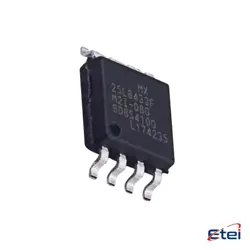
| Package/Case | 8-SOIC (0.154, 3.90mm Width) |
Tổng quan
Description
HCS101/SN is an introductory course focused on the fundamental principles of human communication studies. It explores the various contexts and processes involved in effective communication, including interpersonal, group, organizational, and public communication. The course aims to provide a foundational understanding of how communication shapes human interaction and society.
Key topics covered include the basic models and theories of communication, verbal and non-verbal communication skills, listening strategies, and the impact of culture and technology on communication practices. Students learn to analyze and evaluate different communication scenarios, enhancing their ability to communicate effectively in diverse settings.
The course often incorporates a mix of lectures, discussions, and practical exercises to develop students' communication competencies. By the end of HCS101/SN, students are expected to understand the role of communication in personal and professional contexts and possess the skills to apply communication principles to real-world situations. This foundational knowledge prepares students for more advanced studies in communication or related fields.
Key topics covered include the basic models and theories of communication, verbal and non-verbal communication skills, listening strategies, and the impact of culture and technology on communication practices. Students learn to analyze and evaluate different communication scenarios, enhancing their ability to communicate effectively in diverse settings.
The course often incorporates a mix of lectures, discussions, and practical exercises to develop students' communication competencies. By the end of HCS101/SN, students are expected to understand the role of communication in personal and professional contexts and possess the skills to apply communication principles to real-world situations. This foundational knowledge prepares students for more advanced studies in communication or related fields.
Equivalent
The HCS101/SN is a secure code hopping encoder often used in remote keyless entry systems. Equivalent products include the Microchip HCS200 and HCS300 series, which also offer secure code hopping features. Additionally, the NXP KE1xF and KE1xZ series microcontrollers can serve similar purposes with advanced security features. Always check the specific requirements and compatibility before selecting an equivalent product for your application.
Features
The HCS101/SN is a type of electronic product, often associated with home control systems or smart home interfaces. While specific features can vary depending on the manufacturer and model, typical features might include:
1. Smart Home Integration: Compatibility with various smart home devices and ecosystems, allowing users to control lighting, climate, security, and more from a centralized interface.
2. User Interface: An intuitive, user-friendly interface, possibly featuring a touchscreen or app-based control, enabling easy management of connected devices.
3. Automation: The ability to set up automated routines and schedules for devices, enhancing convenience and energy efficiency.
4. Connectivity: Support for multiple connectivity options such as Wi-Fi, Bluetooth, Zigbee, or Z-Wave, ensuring seamless communication with various smart devices.
5. Voice Control: Integration with voice assistants like Amazon Alexa, Google Assistant, or Apple Siri for hands-free operation.
6. Security Features: Robust security protocols to protect user data and ensure safe operation within the network.
7. Scalability: The ability to expand and integrate new devices over time, accommodating the growth of a smart home setup.
These features collectively enhance home automation, offering users convenience and control.
1. Smart Home Integration: Compatibility with various smart home devices and ecosystems, allowing users to control lighting, climate, security, and more from a centralized interface.
2. User Interface: An intuitive, user-friendly interface, possibly featuring a touchscreen or app-based control, enabling easy management of connected devices.
3. Automation: The ability to set up automated routines and schedules for devices, enhancing convenience and energy efficiency.
4. Connectivity: Support for multiple connectivity options such as Wi-Fi, Bluetooth, Zigbee, or Z-Wave, ensuring seamless communication with various smart devices.
5. Voice Control: Integration with voice assistants like Amazon Alexa, Google Assistant, or Apple Siri for hands-free operation.
6. Security Features: Robust security protocols to protect user data and ensure safe operation within the network.
7. Scalability: The ability to expand and integrate new devices over time, accommodating the growth of a smart home setup.
These features collectively enhance home automation, offering users convenience and control.
Pinout
The HCS101 is a code hopping encoder device used in security applications. It typically comes in an 8-pin package. Here’s a brief overview of its pin functions:
1. VDD (Pin 1): This is the power supply pin, where the operating voltage is provided to the device.
2. S0 (Pin 2): This is a configuration input pin, used to select specific programming or operational modes.
3. S1 (Pin 3): Similar to S0, this pin is used for configuration and mode selection.
4. LED (Pin 4): This output pin is used to drive an LED, which can indicate device status or operations like transmission activity.
5. VSS (Pin 5): The ground pin, which completes the circuit by connecting to the negative supply voltage.
6. BUTTON (Pin 6): This input pin is connected to a switch or button to trigger encoding and transmission of the code.
7. CLK (Pin 7): This clock input pin is used for synchronous serial communication during programming.
8. DATA (Pin 8): This is the data output pin, used for transmitting the encoded signal to a receiver.
This configuration allows the HCS101 to perform secure transmission of data using a rolling code scheme, preventing replay attacks.
1. VDD (Pin 1): This is the power supply pin, where the operating voltage is provided to the device.
2. S0 (Pin 2): This is a configuration input pin, used to select specific programming or operational modes.
3. S1 (Pin 3): Similar to S0, this pin is used for configuration and mode selection.
4. LED (Pin 4): This output pin is used to drive an LED, which can indicate device status or operations like transmission activity.
5. VSS (Pin 5): The ground pin, which completes the circuit by connecting to the negative supply voltage.
6. BUTTON (Pin 6): This input pin is connected to a switch or button to trigger encoding and transmission of the code.
7. CLK (Pin 7): This clock input pin is used for synchronous serial communication during programming.
8. DATA (Pin 8): This is the data output pin, used for transmitting the encoded signal to a receiver.
This configuration allows the HCS101 to perform secure transmission of data using a rolling code scheme, preventing replay attacks.
Manufacturer
The HCS101/SN is manufactured by Microchip Technology Inc. Microchip Technology is a leading semiconductor company that designs and manufactures microcontrollers, mixed-signal, analog, and Flash-IP integrated circuits. The company is known for providing a wide array of embedded control solutions to various industries, enhancing product functionality and performance. They cater to sectors such as automotive, industrial, consumer electronics, communications, and computing. Through its extensive product portfolio and support services, Microchip Technology helps its clients create innovative and efficient electronic applications.
Application
HCS101/SN is a high-performance composite material known for its exceptional thermal and electrical insulating properties. It is primarily used in areas that require high heat resistance and electrical insulation. Common application areas include automotive and aerospace industries for thermal management components, electronics for circuit boards and insulation layers, and industrial machinery for heat shields and protective barriers. Additionally, it is used in renewable energy systems, such as wind turbines and solar panels, where durability and reliability in extreme conditions are crucial. Its versatility and robust performance make it suitable for various high-demand applications requiring advanced material technology.
Package
The HCS101/SN is typically a surface-mount package designed for use in electronic components. It is often found in applications requiring a compact and reliable solution for wireless communication, such as remote controls or security systems. The specific package type can vary based on manufacturer specifications, so it's best to refer to the datasheet for precise details.