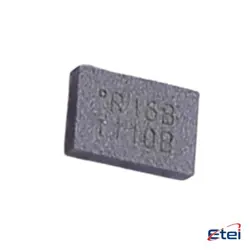
Hình ảnh chỉ để tham khảo
INA148QDRQ1
+BOM-
Nhà sản xuấtTexas Dụng cụ
-
Ông. Phần #INA148QDRQ1
-
Có sẵn2729
365 Đảm bảo chất lượng ngày
7*24 giờ dịch vụ quarantee
90-Bảo hành sau bán hàng ngày
Bảo hành sản phẩm chính xác
Thông số kỹ thuật
| thuộc tính | Giá trị |
| Package / Case | Tape & Reel (TR),Cut Tape (CT),Bulk |
| Series | Automotive, AEC-Q100 |
| Part Status | Active |
| Amplifier Type | Differential |
| Number of Circuits | 1 |
| Slew Rate | 1V/µs |
| -3 dB Bandwidth | 100 kHz |
| Voltage - Input Offset | 1 mV |
| Supply Current | 260µA |
| Current - Output / Channel | 13 mA |
| Voltage - Supply Span(Min) | 2.7 V |
| Voltage - Supply Span(Max) | 36 V |
| Operating Temperature | -40°C ~ 125°C |
| Mounting Type | Surface Mount |
Tổng quan
Description
The INA148QDRQ1 is a precision differential amplifier manufactured by Texas Instruments, designed for applications requiring differential signal processing while maintaining high accuracy and stability. It is part of the INA148 family, featuring a wide supply voltage range and rail-to-rail output, making it suitable for a variety of automotive and industrial applications. The device is AEC-Q100 qualified, ensuring it meets automotive reliability standards.
Key features include:
- Wide supply voltage range: ±2.25V to ±18V
- Rail-to-rail output capability
- Wide common-mode voltage range, from -2V to +80V
- Excellent CMRR (Common-Mode Rejection Ratio), typically around 90 dB
- Low offset voltage and low offset drift over temperature
- Operating temperature range of -40°C to +125°C
The INA148QDRQ1 is available in an SOIC package, making it easy to integrate into PCB designs. Its robust performance across a wide temperature range and ability to handle high common-mode voltages make it ideal for precision measurement in harsh environments.
Key features include:
- Wide supply voltage range: ±2.25V to ±18V
- Rail-to-rail output capability
- Wide common-mode voltage range, from -2V to +80V
- Excellent CMRR (Common-Mode Rejection Ratio), typically around 90 dB
- Low offset voltage and low offset drift over temperature
- Operating temperature range of -40°C to +125°C
The INA148QDRQ1 is available in an SOIC package, making it easy to integrate into PCB designs. Its robust performance across a wide temperature range and ability to handle high common-mode voltages make it ideal for precision measurement in harsh environments.
Equivalent
The INA148QDRQ1 is an isolated difference amplifier. Equivalent products include:
1. Analog Devices AD629 - High Common-Mode Voltage Difference Amplifier.
2. MAX4198/MAX4199 - Precision, High-Voltage, Current-Sense Amplifiers from Maxim Integrated.
3. Linear Technology (now part of Analog Devices) LT1991 - Precision Difference Amplifier.
4. Texas Instruments ISO124 - Precision Isolation Amplifier Series.
Each product may have specific features, so it is important to review datasheets to ensure compatibility with your application.
1. Analog Devices AD629 - High Common-Mode Voltage Difference Amplifier.
2. MAX4198/MAX4199 - Precision, High-Voltage, Current-Sense Amplifiers from Maxim Integrated.
3. Linear Technology (now part of Analog Devices) LT1991 - Precision Difference Amplifier.
4. Texas Instruments ISO124 - Precision Isolation Amplifier Series.
Each product may have specific features, so it is important to review datasheets to ensure compatibility with your application.
Features
The INA148QDRQ1 is an automotive-qualified isolated difference amplifier with several notable features:
1. High Common-Mode Voltage Range: It can handle common-mode voltages up to ±200V, making it suitable for applications requiring isolation from high voltages.
2. Wide Supply Voltage Range: Operates with a supply voltage range from 2.7V to 36V, providing flexibility for various power configurations.
3. Low Offset Voltage: Features a low offset voltage of 2mV, ensuring accurate differential signal processing.
4. Low Gain Error: The device has a typical gain error of only 0.075%, contributing to precise signal amplification.
5. Temperature Range: Operates effectively over a wide temperature range from -40°C to +125°C, suitable for automotive environments.
6. Low Quiescent Current: Consumes low quiescent current, making it efficient for battery-powered applications.
7. Small Package: Available in a small SOIC-8 package, facilitating compact design implementations.
These features make the INA148QDRQ1 ideal for applications requiring high voltage isolation and accurate signal processing, such as battery monitoring and motor control in automotive systems.
1. High Common-Mode Voltage Range: It can handle common-mode voltages up to ±200V, making it suitable for applications requiring isolation from high voltages.
2. Wide Supply Voltage Range: Operates with a supply voltage range from 2.7V to 36V, providing flexibility for various power configurations.
3. Low Offset Voltage: Features a low offset voltage of 2mV, ensuring accurate differential signal processing.
4. Low Gain Error: The device has a typical gain error of only 0.075%, contributing to precise signal amplification.
5. Temperature Range: Operates effectively over a wide temperature range from -40°C to +125°C, suitable for automotive environments.
6. Low Quiescent Current: Consumes low quiescent current, making it efficient for battery-powered applications.
7. Small Package: Available in a small SOIC-8 package, facilitating compact design implementations.
These features make the INA148QDRQ1 ideal for applications requiring high voltage isolation and accurate signal processing, such as battery monitoring and motor control in automotive systems.
Pinout
The INA148QDRQ1 is a precision differential amplifier with the following pin configuration and functions:
1. Pin Count: The device is available in an 8-pin SOIC package.
2. Pin Functions:
- Pin 1 (V+): Positive power supply.
- Pin 2 (IN+): Non-inverting input.
- Pin 3 (IN-): Inverting input.
- Pin 4 (REF): Reference voltage input. It is used to set the output voltage reference level.
- Pin 5 (OUT): Output. Provides the amplified differential signal.
- Pin 6 (V-): Negative power supply or ground.
- Pin 7 (NC): No connection. This pin is not connected internally and can be left floating.
- Pin 8 (NC): No connection. This pin is also not connected internally.
The INA148QDRQ1 is designed for applications that require accurate differential signal amplification with a high input impedance and low offset voltage. It is commonly used in automotive and industrial environments due to its robustness and reliability.
1. Pin Count: The device is available in an 8-pin SOIC package.
2. Pin Functions:
- Pin 1 (V+): Positive power supply.
- Pin 2 (IN+): Non-inverting input.
- Pin 3 (IN-): Inverting input.
- Pin 4 (REF): Reference voltage input. It is used to set the output voltage reference level.
- Pin 5 (OUT): Output. Provides the amplified differential signal.
- Pin 6 (V-): Negative power supply or ground.
- Pin 7 (NC): No connection. This pin is not connected internally and can be left floating.
- Pin 8 (NC): No connection. This pin is also not connected internally.
The INA148QDRQ1 is designed for applications that require accurate differential signal amplification with a high input impedance and low offset voltage. It is commonly used in automotive and industrial environments due to its robustness and reliability.
Manufacturer
The INA148QDRQ1 is manufactured by Texas Instruments (TI). Texas Instruments is a global semiconductor company that designs and manufactures a wide range of electronic components and integrated circuits. TI is well-known for its analog and embedded processing products, which are used in various industries including automotive, industrial, personal electronics, communications equipment, and enterprise systems. The company is headquartered in Dallas, Texas, and has a significant presence worldwide, with manufacturing, design, and sales operations in multiple countries. TI focuses on innovation and technology advancement, aiming to provide solutions that enhance the efficiency and performance of electronic systems.
Application
The INA148QDRQ1 is primarily used in automotive and industrial applications. It excels in differential voltage measurement where high common-mode voltage rejection is required. Common application areas include:
1. Battery management systems: Monitoring and balancing battery cell voltages.
2. Motor control: Current sensing in motor drives.
3. Power management: High-side current sensing in power distribution systems.
4. Signal conditioning: Conditioning signals from high-voltage environments for microcontroller inputs.
5. Electric vehicle systems: Monitoring voltage levels across various components.
Its high common-mode voltage capability and automotive-grade qualification make it ideal for environments where reliability and precision are critical.
1. Battery management systems: Monitoring and balancing battery cell voltages.
2. Motor control: Current sensing in motor drives.
3. Power management: High-side current sensing in power distribution systems.
4. Signal conditioning: Conditioning signals from high-voltage environments for microcontroller inputs.
5. Electric vehicle systems: Monitoring voltage levels across various components.
Its high common-mode voltage capability and automotive-grade qualification make it ideal for environments where reliability and precision are critical.
Package
The INA148QDRQ1 is packaged in an SOIC-8 (Small Outline Integrated Circuit) package. This package type typically features 8 pins and is designed for surface mounting on printed circuit boards, offering a compact form factor suitable for automotive and high-performance applications.