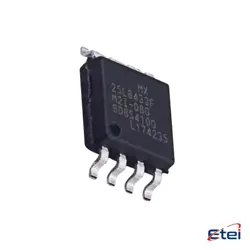
Hình ảnh chỉ để tham khảo
INA148UA
+BOM-
Nhà sản xuấtTexas Dụng cụ
-
Ông. Phần #INA148UA
-
Có sẵn1495
365 Đảm bảo chất lượng ngày
7*24 giờ dịch vụ quarantee
90-Bảo hành sau bán hàng ngày
Bảo hành sản phẩm chính xác
Thông số kỹ thuật
| thuộc tính | Giá trị |
| Package | Bulk,Tube |
| ProductStatus | Active |
| AmplifierType | Differential |
| NumberofCircuits | 1 |
| SlewRate | 1V/µs |
| -3dbBandwidth | 100 kHz |
| Voltage-InputOffset | 1 mV |
| Current-Supply | 260µA |
| Current-Output/Channel | 13 mA |
| Voltage-SupplySpan(Min) | 2.7 V |
| Voltage-SupplySpan(Max) | 36 V |
| OperatingTemperature | -40°C ~ 85°C |
| MountingType | Surface Mount |
| Package/Case | 8-SOIC (0.154, 3.90mm Width) |
Tổng quan
Description
The INA148UA is a precision differential amplifier manufactured by Texas Instruments. It is designed to accurately amplify the difference between two input voltage signals while rejecting any voltage that is common to both inputs. The device is particularly useful in applications where small differential signals need to be extracted from larger common-mode voltages, such as in instrumentation and sensor signal conditioning.
Key features of the INA148UA include a wide common-mode voltage range, high common-mode rejection ratio (CMRR), and low offset voltage. The amplifier supports a single supply voltage and provides a fixed gain, simplifying the design of analog circuits. It is capable of operating over a broad temperature range, making it suitable for industrial environments.
The INA148UA is housed in a standard SOIC-8 package, offering a compact solution for space-constrained applications. Its robust performance and precision make it ideal for use in data acquisition systems, transducer interfaces, and other applications requiring reliable differential signal amplification.
Key features of the INA148UA include a wide common-mode voltage range, high common-mode rejection ratio (CMRR), and low offset voltage. The amplifier supports a single supply voltage and provides a fixed gain, simplifying the design of analog circuits. It is capable of operating over a broad temperature range, making it suitable for industrial environments.
The INA148UA is housed in a standard SOIC-8 package, offering a compact solution for space-constrained applications. Its robust performance and precision make it ideal for use in data acquisition systems, transducer interfaces, and other applications requiring reliable differential signal amplification.
Equivalent
The INA148UA is a high common-mode voltage difference amplifier. Equivalent products may include:
1. AD629 from Analog Devices - Offers similar high common-mode voltage capabilities.
2. MAX4198 from Maxim Integrated - Another high common-mode voltage difference amplifier.
3. LT1990 from Linear Technology (now part of Analog Devices) - Provides comparable functionality.
These alternatives should be checked for specific requirements such as voltage range, bandwidth, and supply voltage to ensure suitability.
1. AD629 from Analog Devices - Offers similar high common-mode voltage capabilities.
2. MAX4198 from Maxim Integrated - Another high common-mode voltage difference amplifier.
3. LT1990 from Linear Technology (now part of Analog Devices) - Provides comparable functionality.
These alternatives should be checked for specific requirements such as voltage range, bandwidth, and supply voltage to ensure suitability.
Features
The INA148UA is a precision differential amplifier with several key features. It is designed to handle high common-mode voltages and is ideal for applications requiring accurate voltage level shifting. Here are some features of the INA148UA:
1. Wide Common-Mode Range: It can manage common-mode voltages up to ±200V, making it suitable for high-voltage applications.
2. Supply Voltage: The amplifier operates with a supply voltage range from ±2.25V to ±18V, providing flexibility for various power supply configurations.
3. Low Offset Voltage: It offers a low offset voltage, enhancing precision in measurement applications.
4. Gain: The INA148UA provides a fixed gain, typically around 1V/V, simplifying design considerations when differential voltage amplification is needed.
5. High CMRR: It features a high common-mode rejection ratio (CMRR), ensuring that common-mode signals do not affect the output.
6. Temperature Range: The device operates over a wide temperature range, typically from -40°C to +85°C, supporting use in harsh environments.
These features make the INA148UA a versatile component for precision measurement and signal conditioning in industrial and instrumentation applications.
1. Wide Common-Mode Range: It can manage common-mode voltages up to ±200V, making it suitable for high-voltage applications.
2. Supply Voltage: The amplifier operates with a supply voltage range from ±2.25V to ±18V, providing flexibility for various power supply configurations.
3. Low Offset Voltage: It offers a low offset voltage, enhancing precision in measurement applications.
4. Gain: The INA148UA provides a fixed gain, typically around 1V/V, simplifying design considerations when differential voltage amplification is needed.
5. High CMRR: It features a high common-mode rejection ratio (CMRR), ensuring that common-mode signals do not affect the output.
6. Temperature Range: The device operates over a wide temperature range, typically from -40°C to +85°C, supporting use in harsh environments.
These features make the INA148UA a versatile component for precision measurement and signal conditioning in industrial and instrumentation applications.
Pinout
The INA148UA is a precision, high-speed difference amplifier designed for signal conditioning in various applications. It is housed in an 8-pin SOIC (Small Outline Integrated Circuit) package. Here is a brief overview of its pin configuration and functions:
1. Pin 1 (V-): Negative power supply voltage.
2. Pin 2 (IN-): Inverting input.
3. Pin 3 (REF): Reference voltage input. This pin is used to set the output voltage level.
4. Pin 4 (IN+): Non-inverting input.
5. Pin 5 (VS-): Negative rail of the power supply.
6. Pin 6 (OUT): Output voltage. It provides the amplified difference between the IN+ and IN- pins.
7. Pin 7 (NC): No connection.
8. Pin 8 (V+): Positive power supply voltage.
The INA148UA is commonly used in applications requiring voltage level shifting, differential signal conditioning, and signal isolation across a wide range of voltages. It offers high common-mode voltage range, making it suitable for industrial and instrumentation applications.
1. Pin 1 (V-): Negative power supply voltage.
2. Pin 2 (IN-): Inverting input.
3. Pin 3 (REF): Reference voltage input. This pin is used to set the output voltage level.
4. Pin 4 (IN+): Non-inverting input.
5. Pin 5 (VS-): Negative rail of the power supply.
6. Pin 6 (OUT): Output voltage. It provides the amplified difference between the IN+ and IN- pins.
7. Pin 7 (NC): No connection.
8. Pin 8 (V+): Positive power supply voltage.
The INA148UA is commonly used in applications requiring voltage level shifting, differential signal conditioning, and signal isolation across a wide range of voltages. It offers high common-mode voltage range, making it suitable for industrial and instrumentation applications.
Manufacturer
The INA148UA is manufactured by Texas Instruments (TI). Texas Instruments is a global semiconductor company that designs and produces a wide array of electronic components, including analog and embedded processing chips. They are known for their innovation in the electronics industry and have a significant impact on various sectors such as automotive, industrial, personal electronics, and communications. TI is headquartered in Dallas, Texas, and has a reputation for quality and reliability in their products, catering to a broad range of applications and industries.
Application
The INA148UA is a precision difference amplifier used in applications requiring accurate voltage measurement and signal conditioning. Key application areas include:
1. Industrial Instrumentation: For measuring differential signals in harsh environments.
2. Data Acquisition Systems: Ensures accurate signal representation in data collection.
3. Sensor Signal Conditioning: Conditions signals from various sensors for further processing.
4. Motor Control: Monitors and controls motor currents and feedback loops.
5. Power Supply Monitoring: Tracks and regulates power supply voltages.
6. Telecommunications: Used in signal processing for communication devices.
Its high common-mode voltage range and accuracy make it suitable for these applications.
1. Industrial Instrumentation: For measuring differential signals in harsh environments.
2. Data Acquisition Systems: Ensures accurate signal representation in data collection.
3. Sensor Signal Conditioning: Conditions signals from various sensors for further processing.
4. Motor Control: Monitors and controls motor currents and feedback loops.
5. Power Supply Monitoring: Tracks and regulates power supply voltages.
6. Telecommunications: Used in signal processing for communication devices.
Its high common-mode voltage range and accuracy make it suitable for these applications.
Package
The INA148UA is a precision differential amplifier from Texas Instruments, and it comes in an 8-pin SOIC (Small Outline Integrated Circuit) package.