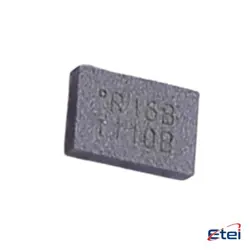
Hình ảnh chỉ để tham khảo
INA826AIDR
+BOM-
Nhà sản xuấtTexas Dụng cụ
-
Ông. Phần #INA826AIDR
-
Có sẵn5659
365 Đảm bảo chất lượng ngày
7*24 giờ dịch vụ quarantee
90-Bảo hành sau bán hàng ngày
Bảo hành sản phẩm chính xác
Thông số kỹ thuật
| thuộc tính | Giá trị |
| Package | Tape & Reel (TR),Cut Tape (CT),Bulk |
| ProductStatus | Active |
| AmplifierType | Instrumentation |
| NumberofCircuits | 1 |
| OutputType | Rail-to-Rail |
| SlewRate | 1V/µs |
| -3dbBandwidth | 1 MHz |
| Current-InputBias | 35 nA |
| Voltage-InputOffset | 40 µV |
| Current-Supply | 200µA |
| Current-Output/Channel | 16 mA |
| Voltage-SupplySpan(Min) | 2.7 V |
| Voltage-SupplySpan(Max) | 36 V |
| OperatingTemperature | -40°C ~ 125°C |
| MountingType | Surface Mount |
| Package/Case | 8-SOIC (0.154, 3.90mm Width) |
Tổng quan
Description
The INA826AIDR is a precision instrumentation amplifier designed by Texas Instruments, ideal for applications requiring high accuracy and stability. This device is part of the INA826 series and is notable for its low power consumption, low offset voltage, and excellent performance in precision signal processing tasks. Key features include a wide operating voltage range, typically from 4.5V to 36V, and a wide bandwidth, making it suitable for various applications such as sensor signal amplification, data acquisition systems, and medical instrumentation.
The amplifier offers a high common-mode rejection ratio (CMRR) and low input bias current, ensuring accurate signal amplification even in noisy environments. It is available in an 8-pin SOIC package, marked by its DR suffix, and supports a wide temperature range, enhancing its suitability for industrial and commercial applications. The INA826AIDR is user-friendly, with adjustable gain set by a single external resistor, allowing for flexibility in design and implementation. Overall, it is an efficient solution for precise, low-power signal amplification needs.
The amplifier offers a high common-mode rejection ratio (CMRR) and low input bias current, ensuring accurate signal amplification even in noisy environments. It is available in an 8-pin SOIC package, marked by its DR suffix, and supports a wide temperature range, enhancing its suitability for industrial and commercial applications. The INA826AIDR is user-friendly, with adjustable gain set by a single external resistor, allowing for flexibility in design and implementation. Overall, it is an efficient solution for precise, low-power signal amplification needs.
Equivalent
The INA826AIDR is a precision instrumentation amplifier. Equivalent products include:
1. Analog Devices AD8226: A low power, wide supply range instrumentation amplifier.
2. Maxim Integrated MAX4208: An ultra-low offset/drift instrumentation amplifier.
3. Linear Technology (now part of Analog Devices) LT1167: A precision instrumentation amplifier.
4. Microchip MCP6N11: A low power, single-ended instrumentation amplifier.
When selecting equivalents, ensure they meet your specific requirements for gain, bandwidth, supply voltage, and other key parameters.
1. Analog Devices AD8226: A low power, wide supply range instrumentation amplifier.
2. Maxim Integrated MAX4208: An ultra-low offset/drift instrumentation amplifier.
3. Linear Technology (now part of Analog Devices) LT1167: A precision instrumentation amplifier.
4. Microchip MCP6N11: A low power, single-ended instrumentation amplifier.
When selecting equivalents, ensure they meet your specific requirements for gain, bandwidth, supply voltage, and other key parameters.
Features
The INA826AIDR is a precision instrumentation amplifier featuring high accuracy and low power consumption. Key features include:
1. Wide Supply Range: Operates from a single supply voltage of 4.5 V to 36 V, or dual supplies from ±2.25 V to ±18 V.
2. Low Power Consumption: The amplifier is designed for low power operation, making it suitable for battery-powered applications.
3. High CMRR: Offers high common-mode rejection ratio (CMRR) of up to 100 dB, enhancing precision by minimizing noise interference.
4. Rail-to-Rail Output: Provides rail-to-rail output swing for maximum dynamic signal range.
5. Low Offset Voltage: Features a low offset voltage of 35 µV, ensuring high accuracy in measurements.
6. Adjustable Gain: Gain can be set from 1 to 1000, allowing for flexibility in various applications.
7. Wide Bandwidth: Supports a wide bandwidth of 1.3 MHz at a gain of 1, suitable for a range of signal frequencies.
8. Low Input Bias Current: Offers an input bias current of 3 nA, minimizing errors due to input leakage.
These features make the INA826AIDR ideal for precision data acquisition, medical instrumentation, and industrial process controls.
1. Wide Supply Range: Operates from a single supply voltage of 4.5 V to 36 V, or dual supplies from ±2.25 V to ±18 V.
2. Low Power Consumption: The amplifier is designed for low power operation, making it suitable for battery-powered applications.
3. High CMRR: Offers high common-mode rejection ratio (CMRR) of up to 100 dB, enhancing precision by minimizing noise interference.
4. Rail-to-Rail Output: Provides rail-to-rail output swing for maximum dynamic signal range.
5. Low Offset Voltage: Features a low offset voltage of 35 µV, ensuring high accuracy in measurements.
6. Adjustable Gain: Gain can be set from 1 to 1000, allowing for flexibility in various applications.
7. Wide Bandwidth: Supports a wide bandwidth of 1.3 MHz at a gain of 1, suitable for a range of signal frequencies.
8. Low Input Bias Current: Offers an input bias current of 3 nA, minimizing errors due to input leakage.
These features make the INA826AIDR ideal for precision data acquisition, medical instrumentation, and industrial process controls.
Pinout
The INA826AIDR is a precision instrumentation amplifier from Texas Instruments. It is available in an 8-pin SOIC package. The pin functions are as follows:
1. V+: Positive power supply voltage.
2. IN+: Non-inverting input.
3. IN-: Inverting input.
4. RG: Gain setting resistor connection.
5. RG: Gain setting resistor connection (same as pin 4, used to set the gain via an external resistor).
6. REF: Reference voltage input.
7. OUT: Output.
8. V-: Negative power supply voltage.
The INA826AIDR is designed for accurate amplification of small differential signals and operates with a wide supply voltage range, making it suitable for a variety of applications including sensor signal conditioning and data acquisition systems.
1. V+: Positive power supply voltage.
2. IN+: Non-inverting input.
3. IN-: Inverting input.
4. RG: Gain setting resistor connection.
5. RG: Gain setting resistor connection (same as pin 4, used to set the gain via an external resistor).
6. REF: Reference voltage input.
7. OUT: Output.
8. V-: Negative power supply voltage.
The INA826AIDR is designed for accurate amplification of small differential signals and operates with a wide supply voltage range, making it suitable for a variety of applications including sensor signal conditioning and data acquisition systems.
Manufacturer
The manufacturer of the INA826AIDR is Texas Instruments. Texas Instruments is a global semiconductor company that designs and manufactures a wide array of electronic components, including integrated circuits and analog devices. The company is known for its innovation and extensive portfolio of products used in various applications such as industrial, automotive, consumer electronics, and communications. Founded in 1930 and headquartered in Dallas, Texas, Texas Instruments focuses on developing technologies that facilitate advancements in electronics, making it a leader in the semiconductor industry.
Application
The INA826AIDR is a precision instrumentation amplifier commonly used in applications requiring accurate, low-noise, and high-precision signal conditioning. Key application areas include:
1. Medical Instrumentation: For amplifying low-level biosignals, such as ECG or EEG.
2. Industrial Automation: In sensor signal conditioning and data acquisition systems.
3. Weigh Scales: For precise load cell and strain gauge signal amplification.
4. Test and Measurement Equipment: To ensure accurate data collection in laboratory instruments.
5. Consumer Electronics: In devices requiring precise sensor interfaces.
6. Automotive: For sensor interfacing in various electronic control units.
These applications benefit from the INA826AIDR's high common-mode rejection ratio (CMRR) and low offset voltage.
1. Medical Instrumentation: For amplifying low-level biosignals, such as ECG or EEG.
2. Industrial Automation: In sensor signal conditioning and data acquisition systems.
3. Weigh Scales: For precise load cell and strain gauge signal amplification.
4. Test and Measurement Equipment: To ensure accurate data collection in laboratory instruments.
5. Consumer Electronics: In devices requiring precise sensor interfaces.
6. Automotive: For sensor interfacing in various electronic control units.
These applications benefit from the INA826AIDR's high common-mode rejection ratio (CMRR) and low offset voltage.
Package
The INA826AIDR is an instrumentation amplifier from Texas Instruments, available in a small-outline integrated circuit (SOIC) package. Specifically, it comes in an 8-pin SOIC (SO-8) package, which is suitable for surface-mount technology (SMT) applications.