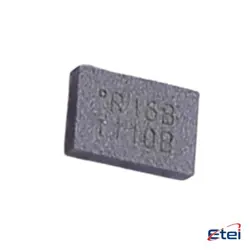
Hình ảnh chỉ để tham khảo
IR11682STRPBF
+BOMIC SECONDARY SIDE CTRLR 8SOIC
-
Nhà sản xuấtCông nghệ Infineon
-
Ông. Phần #IR11682STRPBF
-
Bảng dữ liệu IR11682STRPBF DataSheet
-
Có sẵn3596
365 Đảm bảo chất lượng ngày
7*24 giờ dịch vụ quarantee
90-Bảo hành sau bán hàng ngày
Bảo hành sản phẩm chính xác
Thông số kỹ thuật
| thuộc tính | Giá trị |
| Series | SmartRectifier™ |
| Part Status | Active |
| Digi Key Programmable | Not Verified |
| Applications | Secondary-Side Controller, Synchronous Rectifier |
| Voltage - Supply | 8.6V ~ 18V |
| Supply Current | 48 mA |
| Operating Temperature | -25°C ~ 125°C |
| Mounting Type | Surface Mount |
| Package / Case | 8-SOIC (0.154", 3.90mm Width) |
| Supplier Device Package | 8-SOIC |
| Base Product Number | IR11682 |
Tổng quan
Description
Key features of the IR11682STRPBF include adaptive dead-time control, which optimizes the timing between the conduction states of the MOSFETs, and a light-load management feature to maintain high efficiency across varying load conditions. The controller is designed to operate over a wide range of input voltages and is equipped with protection features such as over-voltage protection and short-circuit protection, enhancing the reliability of the power supply system.
Overall, the IR11682STRPBF is a sophisticated component that helps in achieving higher efficiency and performance in power conversion applications, making it a valuable choice for modern electronic devices requiring efficient power management.
Equivalent
1. UCC24610 by Texas Instruments
2. NCP4304 by ON Semiconductor
3. TEA2208T by NXP Semiconductors
These alternatives offer similar functionalities for synchronous rectification applications. Always verify the specific requirements and datasheets to ensure compatibility with your application.
Features
1. Dual-Channel Operation: Supports two synchronous rectifier MOSFETs, improving efficiency in isolated flyback and forward converters.
2. Programmable Switching Frequency: Allows for flexibility in different power supply designs.
3. Accurate Timing Control: Offers precise control of the MOSFET turn-on and turn-off timings to minimize body diode conduction and improve efficiency.
4. Low Standby Power Consumption: Designed for energy-saving applications, reducing overall power loss.
5. Undervoltage Lockout (UVLO): Protects the circuit by preventing operation when the input voltage is too low.
6. Adjustable Dead Time: Provides adaptable dead time between switching transitions to suit various MOSFET characteristics.
7. Wide Operating Range: Operates effectively across a broad range of input voltages and load conditions.
8. SOIC-8 Package: Comes in a standard 8-pin SOIC package for easy integration onto circuit boards.
These features make it suitable for enhancing the efficiency of power supplies in various electronic applications.
Pinout
1. VCC (Pin 1): Connects to the power supply for the IC.
2. GND (Pin 2): Ground reference for the IC.
3. CS (Pin 3): Current sense input for detecting the zero-crossing of the inductor current.
4. VD (Pin 4): Drain voltage sense input for the MOSFET.
5. VS (Pin 5): Source voltage of the synchronous MOSFET.
6. GD (Pin 6): Gate drive output to control the gate of the synchronous MOSFET.
7. RT (Pin 7): Timing resistor pin used to set the internal oscillator frequency.
8. VCC (Pin 8): A duplicate of Pin 1 for redundant connection.
These pins work together to optimize efficiency by ensuring synchronous rectification, reducing power losses and improving performance in power supply applications.
Manufacturer
Application
1. Switch Mode Power Supplies (SMPS): Used in both isolated and non-isolated topologies to enhance efficiency by replacing diodes with MOSFETs.
2. Adapters and Chargers: Improves energy efficiency and heat dissipation in consumer electronics chargers.
3. LED Drivers: Enhances power conversion efficiency in LED lighting applications.
4. Industrial Power Supplies: Used in industrial equipment for efficient power management.
5. Telecommunications: Assists in achieving high efficiency in telecom power systems.
These applications benefit from reduced power losses and improved thermal performance.