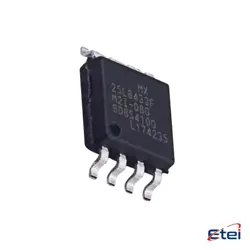
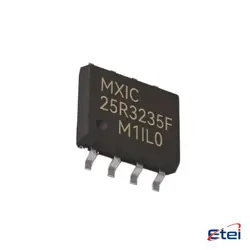
Hình ảnh chỉ để tham khảo
IS25LP064D-JBLA3
+BOMIC FLASH 64MBIT SPI/QUAD 8SOIC
-
Nhà sản xuấtISSI, Integrated Silicon Solution Inc
-
Ông. Phần #IS25LP064D-JBLA3
-
Bảng dữ liệu IS25LP064D-JBLA3 DataSheet
-
Gói SOP-8
-
Có sẵn6246
365 Đảm bảo chất lượng ngày
7*24 giờ dịch vụ quarantee
90-Bảo hành sau bán hàng ngày
Bảo hành sản phẩm chính xác
Thông số kỹ thuật
| thuộc tính | Giá trị |
| Package / Case | Tube |
| Series | Automotive, AEC-Q100 |
| Part Status | Active |
| Memory Type | Non-Volatile |
| Memory Format | FLASH |
| Technology | FLASH - NOR |
| Memory Size | 64Mb (8M x 8) |
| Memory Interface | SPI - Quad I/O, QPI, DTR |
| Clock Frequency | 166 MHz |
| Write Cycle Time - Word Page | 800µs |
| Voltage - Supply | 2.7V ~ 3.6V |
| Operating Temperature | -40°C ~ 125°C (TA) |
| Mounting Type | Surface Mount |
Tổng quan
Description
Key characteristics of the IS25LP064D-JBLA3 include:
- Interface: It uses a Serial Peripheral Interface (SPI) which supports single, dual, and quad output modes for flexible data communication.
- Performance: The device offers fast read and write operations with a maximum clock frequency up to 133 MHz, ensuring efficient data handling.
- Low Power: Designed for low power operation, it is optimized for battery-powered and energy-sensitive applications, with deep power-down modes reducing power consumption further.
- Reliability: It includes features such as sector erase capability, block protection, and software write protection to enhance data integrity.
- Temperature Range: It operates over a wide temperature range, making it suitable for industrial and consumer electronics applications.
Overall, the IS25LP064D-JBLA3 provides a robust and efficient solution for applications requiring reliable non-volatile memory storage.
Equivalent
1. Micron: MT25QL064A
2. Winbond: W25Q64JV
3. Macronix: MX25L6406E
4. Cypress: S25FL064L
5. Adesto: AT25SF641
These chips provide similar memory size, interface, and functionality, making them suitable alternatives in applications requiring SPI NOR Flash.
Features
Key features include:
- 64 Mbit density arranged in 8 MB capacity
- SPI, Dual SPI, and Quad SPI modes for enhanced data transfer rates
- Low power consumption and wide voltage operation (2.3V to 3.6V)
- Uniform 4KB sectors with typical sector erase time of 45 ms
- Supports standard, dual, and quad I/O protocols
- Enhanced security features including OTP (One-Time Programmable) memory array
- JEDEC Standard JESD47 compliant for reliability and endurance
- Ideal for use in consumer electronics, industrial applications, and embedded systems.
These features make it suitable for applications requiring reliable, high-speed, and non-volatile memory storage.
Pinout
1. CS# (Chip Select): This input pin is used to select or deselect the chip.
2. SO/SIO1 (Serial Output / IO1): This pin acts as the serial data output (in SPI mode) or an input/output pin in Dual/Quad mode.
3. WP#/SIO2 (Write Protect / IO2): Used for write protection in SPI mode or as an input/output in Quad mode.
4. GND (Ground): Ground reference for the power supply.
5. SI/SIO0 (Serial Input / IO0): Acts as the serial data input (in SPI mode) or an input/output pin in Dual/Quad mode.
6. SCK (Serial Clock): Provides the clock signal required to synchronize data transfers.
7. HOLD#/SIO3 (Hold / IO3): Pauses serial communication in SPI mode or acts as an input/output in Quad mode.
8. VCC (Power Supply): Supplies power to the device.
These pins facilitate standard serial communication using SPI and support advanced operations in Dual and Quad I/O modes.
Manufacturer
Application
1. Consumer Electronics: Used in devices like TVs, set-top boxes, and gaming consoles for firmware storage.
2. Industrial Systems: Supports data logging and configuration storage in industrial automation equipment.
3. IoT Devices: Provides non-volatile storage for firmware and user data in various IoT applications.
4. Networking Equipment: Used in routers and switches for configuration settings and software.
5. Automotive Systems: Suitable for infotainment systems and advanced driver-assistance systems (ADAS).
These applications benefit from the serial NOR flash technology's high speed, reliability, and low power consumption.