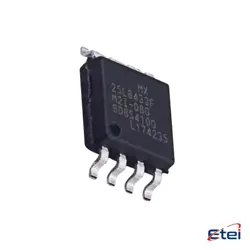
Thông số kỹ thuật
| thuộc tính | Giá trị |
| Package / Case | Tape & Reel (TR),Cut Tape (CT),Bulk |
| Part Status | Active |
| Type | General Purpose |
| Number of Elements | 1 |
| Output Type | DTL, MOS, Open-Collector, Open-Emitter, RTL, TTL |
| Voltage - Supply, Single/Dual (±) | 3.5V ~ 30V, ±1.75V ~ 15V |
| Voltage - Input Offset (Max) | 3mV @ ±15V |
| Current - Input Bias(Max) | 0.1µA @ ±15V |
| Current - Output (Typ) | 50mA |
| Current - Quiescent (Max) | 6mA |
| Operating Temperature | -40°C ~ 85°C |
| Mounting Type | Surface Mount |
Tổng quan
Description
The LM211DR is a precision voltage comparator integrated circuit commonly used in electronic applications. It is designed for single-supply or dual-supply operations, making it versatile for various circuit designs. The device provides a fast response time and low input offset voltage, ensuring accurate voltage comparison. The LM211DR can operate over a wide voltage range and supports open-collector output, enabling it to drive a variety of loads, including relays and LEDs.
Key features of the LM211DR include a high input impedance and low power consumption, making it suitable for battery-powered devices. It is capable of operating in environments with temperatures ranging from -40°C to 85°C. The IC is available in a small SOIC-8 package, which is conducive for compact circuit designs.
Typical applications for the LM211DR include zero-crossing detectors, signal conditioning, and voltage level detection in power management systems. Its reliability and precision make it a popular choice among engineers for both analog and digital circuit integration.
Key features of the LM211DR include a high input impedance and low power consumption, making it suitable for battery-powered devices. It is capable of operating in environments with temperatures ranging from -40°C to 85°C. The IC is available in a small SOIC-8 package, which is conducive for compact circuit designs.
Typical applications for the LM211DR include zero-crossing detectors, signal conditioning, and voltage level detection in power management systems. Its reliability and precision make it a popular choice among engineers for both analog and digital circuit integration.
Equivalent
The LM211DR is a voltage comparator. Equivalent products include the LM311 from Texas Instruments, UA311 from Fairchild Semiconductor, LM111 from National Semiconductor, and the TL331 from Texas Instruments. When selecting an equivalent, ensure that the package type, voltage range, and performance characteristics match your requirements. Always check the datasheets for compatibility.
Features
The LM211DR is a voltage comparator from Texas Instruments, designed for high-speed applications. Key features include:
1. Wide Supply Voltage Range: Operates from 3 V to 32 V, making it versatile for various applications.
2. High Speed: Offers fast response times with a propagation delay of approximately 200 ns.
3. Low Input Offset Voltage: Ensures precision with minimal deviation, typically around 2 mV.
4. Open Collector Output: Allows for flexible interfacing with digital logic or other components.
5. Low Power Consumption: Draws minimal current, typically around 1.1 mA, enhancing energy efficiency.
6. Wide Temperature Range: Functions reliably across a broad temperature range of -40°C to +85°C.
7. Differential Input: Can compare two voltages efficiently, supporting differential input voltages up to the positive supply voltage.
8. Compact Package: Available in SOIC-8 package (DR), suitable for space-constrained designs.
These features make the LM211DR suitable for applications in signal processing, industrial automation, and other areas requiring quick and accurate voltage comparison.
1. Wide Supply Voltage Range: Operates from 3 V to 32 V, making it versatile for various applications.
2. High Speed: Offers fast response times with a propagation delay of approximately 200 ns.
3. Low Input Offset Voltage: Ensures precision with minimal deviation, typically around 2 mV.
4. Open Collector Output: Allows for flexible interfacing with digital logic or other components.
5. Low Power Consumption: Draws minimal current, typically around 1.1 mA, enhancing energy efficiency.
6. Wide Temperature Range: Functions reliably across a broad temperature range of -40°C to +85°C.
7. Differential Input: Can compare two voltages efficiently, supporting differential input voltages up to the positive supply voltage.
8. Compact Package: Available in SOIC-8 package (DR), suitable for space-constrained designs.
These features make the LM211DR suitable for applications in signal processing, industrial automation, and other areas requiring quick and accurate voltage comparison.
Pinout
The LM211DR is a precision voltage comparator integrated circuit. It is typically packaged in an 8-pin SOIC (Small Outline Integrated Circuit) package. Here is a brief overview of the pin functions:
1. Pin 1 (Balance): Used for offset balancing.
2. Pin 2 (IN-): Inverting input.
3. Pin 3 (IN+): Non-inverting input.
4. Pin 4 (V-): Negative supply voltage (ground).
5. Pin 5 (BAL/STRB): Balance strobe, used to adjust the offset voltage.
6. Pin 6 (OUT): Output. This pin outputs the result of the comparison between the IN+ and IN- inputs.
7. Pin 7 (V+): Positive supply voltage.
8. Pin 8 (NC): No connection.
The LM211DR is used in applications where a comparison between two voltages is needed, such as zero-crossing detectors, over-voltage detectors, and as a general-purpose comparator in analog applications.
1. Pin 1 (Balance): Used for offset balancing.
2. Pin 2 (IN-): Inverting input.
3. Pin 3 (IN+): Non-inverting input.
4. Pin 4 (V-): Negative supply voltage (ground).
5. Pin 5 (BAL/STRB): Balance strobe, used to adjust the offset voltage.
6. Pin 6 (OUT): Output. This pin outputs the result of the comparison between the IN+ and IN- inputs.
7. Pin 7 (V+): Positive supply voltage.
8. Pin 8 (NC): No connection.
The LM211DR is used in applications where a comparison between two voltages is needed, such as zero-crossing detectors, over-voltage detectors, and as a general-purpose comparator in analog applications.
Manufacturer
The LM211DR is a product manufactured by Texas Instruments (TI). Texas Instruments is a global semiconductor company that designs and manufactures a variety of integrated circuits and semiconductors for electronics design and manufacturing. TI is known for producing analog and embedded processing chips, which are used in a wide array of electronic devices and applications. The company is a leader in the semiconductor industry, providing solutions for sectors such as automotive, industrial, personal electronics, communications, and enterprise systems.
Application
The LM211DR is a voltage comparator commonly used in various electronic applications. Key application areas include:
1. Voltage Level Detection: Monitoring voltage levels in battery-powered devices to trigger alarms or shutdowns.
2. Oscillator Circuits: Used in creating clock pulses or oscillators due to its fast response time.
3. Zero-Crossing Detectors: Converting AC signals to DC by detecting zero crossing points.
4. Signal Conditioning: Comparing input signals for analog-to-digital conversion.
5. Pulse Width Modulation (PWM): Used in motor speed controls and power supplies.
6. Analog-to-Digital Interfaces: Enhancing signal reading accuracy and response times.
These applications leverage the LM211DR's high speed, low input bias current, and wide supply voltage range.
1. Voltage Level Detection: Monitoring voltage levels in battery-powered devices to trigger alarms or shutdowns.
2. Oscillator Circuits: Used in creating clock pulses or oscillators due to its fast response time.
3. Zero-Crossing Detectors: Converting AC signals to DC by detecting zero crossing points.
4. Signal Conditioning: Comparing input signals for analog-to-digital conversion.
5. Pulse Width Modulation (PWM): Used in motor speed controls and power supplies.
6. Analog-to-Digital Interfaces: Enhancing signal reading accuracy and response times.
These applications leverage the LM211DR's high speed, low input bias current, and wide supply voltage range.
Package
The LM211DR is typically housed in a SOIC-8 (Small Outline Integrated Circuit) package, which is a surface-mount package with eight pins.