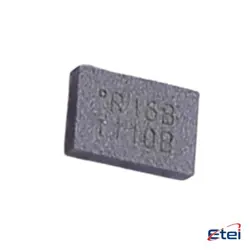
Hình ảnh chỉ để tham khảo
LM393DR2G
+BOMCOMPARATOR, DUAL, LOW OFFSET VOL
-
Nhà sản xuấtCông ty bán dẫn Fairchild
-
Ông. Phần #LM393DR2G
-
Bảng dữ liệu LM393DR2G DataSheet
-
Gói SOIC-8
-
Có sẵn3727
365 Đảm bảo chất lượng ngày
7*24 giờ dịch vụ quarantee
90-Bảo hành sau bán hàng ngày
Bảo hành sản phẩm chính xác
Thông số kỹ thuật
| thuộc tính | Giá trị |
| Package | Bulk |
| ProductStatus | Active |
| Type | General Purpose |
| NumberofElements | 2 |
| OutputType | CMOS, DTL, ECL, MOS, Open-Collector, TTL |
| Voltage-SupplySingle/Dual(±) | 2V ~ 36V, ±1V ~ 18V |
| Voltage-InputOffset(Max) | 5mV @ 30V |
| Current-InputBias(Max) | 0.25µA @ 5V |
| Current-Output(Typ) | 16mA @ 5V |
| Current-Quiescent(Max) | 2.5mA |
| OperatingTemperature | 0°C ~ 70°C |
| Package/Case | 8-SOIC (0.154, 3.90mm Width) |
| MountingType | Surface Mount |
Tổng quan
Description
Key features of the LM393DR2G include low input offset voltage, low power consumption, and the ability to function over a wide range of power supply voltages, typically from 2 V to 36 V. This makes it versatile for various applications such as voltage sensing, level shifting, and pulse generation.
The LM393DR2G operates with an open-collector output, allowing multiple outputs to be connected in a wired-OR configuration. It is designed to interface directly with TTL and CMOS logic. This IC is popular in automotive, industrial, and consumer electronics due to its reliability and efficiency. It is often used in applications requiring accurate voltage monitoring and comparison with minimal power usage.
Equivalent
1. LM393P
2. LM393N
3. LM393D
4. LM358 (functionally similar, though typically used as an op-amp)
5. MC3302
6. TLV1702 (for low-voltage applications)
These components have similar functionalities but may vary in certain specifications like package type or voltage range, so always verify datasheet details before substituting.
Features
1. Dual Comparator: Contains two independent voltage comparators in a single package.
2. Wide Supply Voltage Range: Operates from 2V to 36V, suitable for battery-operated devices and various applications.
3. Low Input Bias Current: Offers high precision and low power consumption.
4. Low Input Offset Voltage: Ensures accurate and reliable performance.
5. Wide Common-Mode Voltage Range: Works even with input voltages near ground level.
6. Open-Collector Output: Allows for wired AND connections and interfacing with logic systems of different voltage levels.
7. Low Power Consumption: Ideal for low-power and battery-powered designs.
8. Temperature Range: Operates across an industrial temperature range of -40°C to 85°C.
9. Compact Package: Available in an SOIC-8 package, saving space on PCBs.
These features make the LM393DR2G suitable for applications like zero-crossing detectors, pulse-width modulation, and analog-to-digital converters.
Pinout
1. Pin 1 (OUT1): Output for comparator 1.
2. Pin 2 (IN1-): Inverting input for comparator 1.
3. Pin 3 (IN1+): Non-inverting input for comparator 1.
4. Pin 4 (GND): Ground connection.
5. Pin 5 (IN2+): Non-inverting input for comparator 2.
6. Pin 6 (IN2-): Inverting input for comparator 2.
7. Pin 7 (OUT2): Output for comparator 2.
8. Pin 8 (VCC): Positive power supply.
The LM393DR2G operates with a wide range of supply voltages and is commonly used in applications requiring comparison of voltages, such as zero-crossing detectors, voltage monitoring, and level shifting. It provides open-collector outputs, which allow several comparators to be connected to a single bus line.
Manufacturer
Application
1. Voltage Comparators: Used in circuits requiring comparison between two voltage levels.
2. Zero-Crossing Detectors: Identifies when an AC signal crosses zero voltage.
3. Oscillator Circuits: Supports waveform generation by acting as a timing component.
4. Analog-to-Digital Converters (ADC): Assists in converting analog signals to digital by comparing input signals.
5. Level Shifters: Used to interface circuits operating at different voltage levels.
6. Battery Management Systems: Monitors battery status and health by comparing voltage levels.
7. Sensor Interface Circuits: Converts sensor outputs to logical outputs for further processing.
These diverse applications highlight the component's versatility in electronic design.