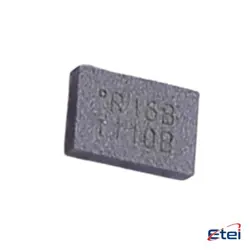
Hình ảnh chỉ để tham khảo
MOCD213M
+BOMOPTOISO 2.5KV 2CH TRANS 8-SOIC
-
Nhà sản xuấtonsemi
-
Ông. Phần #MOCD213M
-
Bảng dữ liệu MOCD213M DataSheet
-
Có sẵn10434
365 Đảm bảo chất lượng ngày
7*24 giờ dịch vụ quarantee
90-Bảo hành sau bán hàng ngày
Bảo hành sản phẩm chính xác
Thông số kỹ thuật
| thuộc tính | Giá trị |
| Part Status | Active |
| Number of Channels | 2 |
| Voltage - Isolation | 2500Vrms |
| Current Transfer Ratio (Min) | 100% @ 10mA |
| Turn On / Turn Off Time (Typ) | 7.5µs, 5.7µs |
| Rise / Fall Time (Typ) | 1.6µs, 2.2µs |
| Input Type | DC |
| Output Type | Transistor |
| Voltage - Output (Max) | 70V |
| Current - Output / Channel | 150mA |
| Voltage - Forward (Vf) (Typ) | 1.25V |
| Current - DC Forward (If) (Max) | 60 mA |
| Vce Saturation (Max) | 400mV |
| Operating Temperature | -40°C ~ 100°C |
| Mounting Type | Surface Mount |
| Package / Case | 8-SOIC (0.154", 3.90mm Width) |
| Supplier Device Package | 8-SOIC |
| Base Product Number | MOCD213 |
Tổng quan
Description
Hands-on experience through lab sessions or projects may be a part of the curriculum, allowing students to design, simulate, and test modem systems. The course often involves using simulation software to model communication systems and understand real-world applications like internet connectivity, wireless communications, and satellite communications.
Prerequisites usually include foundational courses in electrical engineering or computer science, emphasizing signal processing and communication theory. By the end of the course, students should be able to design and analyze efficient modem systems tailored for specific communication requirements.
Equivalent
1. TLP521-1 by Toshiba
2. 4N35 by Vishay
3. PC817 by Sharp
4. LTV-817 by Lite-On
These alternatives may have different specifications, so it's important to verify the parameters to ensure compatibility with your application.
Features
1. Isolation: Provides electrical isolation between input and output, protecting components from high voltages.
2. Input: Utilizes a gallium arsenide infrared LED as the input source to transmit signals.
3. Output: Features a photo-darlington transistor that detects the infrared light and converts it back to an electrical signal.
4. High Voltage: Capable of withstanding high voltage levels (usually up to 5,000 VRMS), enabling safe connections between high and low voltage sections.
5. Compact Size: Available in a small dual in-line package (DIP), making it suitable for space-constrained applications.
6. Low Power Consumption: Requires minimal power, which is beneficial for energy-efficient designs.
7. Wide Operating Temperature Range: Functions effectively over a broad temperature range, enhancing reliability in various environmental conditions.
8. Fast Switching Speed: Offers relatively fast response times, suitable for many digital applications.
These features make the MOCD213M suitable for applications in power supply, signal isolation, and interfacing between high-voltage devices and low-voltage components.
Pinout
Here is a brief overview of its pin functions:
1. Pin 1 (Anode): This pin is connected to the anode of the internal LED.
2. Pin 2 (Cathode): This pin is connected to the cathode of the internal LED.
3. Pin 3 (NC - No Connection): This pin is not internally connected and is usually not used.
4. Pin 4 (Emitter 1): This pin is an emitter of the phototransistor.
5. Pin 5 (Collector): This pin is the collector of the phototransistor.
6. Pin 6 (Emitter 2): This pin is another emitter of the phototransistor, allowing for various output configurations.
The MOCD213M transfers electrical signals using an LED to illuminate a phototransistor, maintaining electrical isolation between input and output. This makes it suitable for applications requiring signal isolation, protection, and noise reduction across circuits.