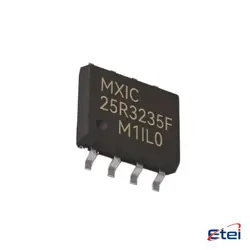
Hình ảnh chỉ để tham khảo
NCEP15T14D
+BOM-
Nhà sản xuấtWuxi NCE Power Semiconductor
-
Ông. Phần #NCEP15T14D
-
Bảng dữ liệu NCEP15T14D DataSheet
-
Có sẵn11006
365 Đảm bảo chất lượng ngày
7*24 giờ dịch vụ quarantee
90-Bảo hành sau bán hàng ngày
Bảo hành sản phẩm chính xác
Thông số kỹ thuật
| thuộc tính | Giá trị |
| Manufacturer | Wuxi NCE Power Semiconductor |
| Package | TO-263-2 |
| OperatingTemperature | -55℃~+175℃ |
| Current-ContinuousDrain(Id) | 140A |
| Pd-PowerDissipation | 340W |
| DraintoSourceVoltage | 150V |
| RDS(on) | 6.2mΩ@10V,70A |
| GateThresholdVoltage(Vgs(th)@Id) | 4V |
| Type | 1 N-channel |
| GateCharge(Qg) | 80nC |
| InputCapacitance(Ciss@Vds) | 5.9nF@75V |
| ReverseTransferCapacitance(Crss@Vds) | 7pF@75V |
Tổng quan
Description
To understand the specific details of NCEP15T14D, one would typically need access to NCEP's documentation or data archives, which provide detailed descriptions of their datasets, including naming conventions, data types, and applications. NCEP datasets are often used in meteorological research, weather prediction, and climate studies, and they play a crucial role in understanding and forecasting weather patterns and climate variations.
If you are interested in using or exploring this dataset, consulting NCEP's official resources or academic publications that reference it would be beneficial for obtaining precise information.
Equivalent
Pinout
The pin functions are as follows:
1. Gate (G): The gate pin is used to control the flow of current between the drain and the source. A voltage applied to the gate alters the conductivity of the channel.
2. Drain (D): The drain is the terminal through which the main current flows when the MOSFET is in the 'on' state.
3. Source (S): The source is the terminal through which the current enters the MOSFET.
These components are essential in power management and are used in various applications, including inverters, motor controllers, and power supplies.
Manufacturer
Application
1. Tooling Industry: Used in the manufacturing of cutting tools, dies, and molds due to its ability to withstand high stress and temperature.
2. Automotive Sector: Utilized in engine components and other parts that require high wear resistance.
3. Aerospace Industry: Applied in components that demand high strength-to-weight ratios and durability.
4. Manufacturing and Engineering: Suitable for heavy machinery parts that experience significant wear and tear.
These applications leverage the material's properties to enhance the lifespan and reliability of critical components.