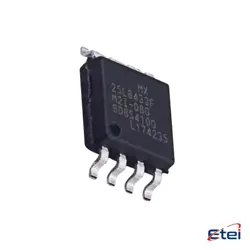
Hình ảnh chỉ để tham khảo
NCS1-292+
+BOM1:1 LTCC TRANSFORMER, 1650 - 285
-
Nhà sản xuấtMini-mạch
-
Ông. Phần #NCS1-292+
-
Bảng dữ liệu NCS1-292+ DataSheet
-
Có sẵn28694
365 Đảm bảo chất lượng ngày
7*24 giờ dịch vụ quarantee
90-Bảo hành sau bán hàng ngày
Bảo hành sản phẩm chính xác
Thông số kỹ thuật
| thuộc tính | Giá trị |
| Part Status | Active |
| Frequency Range | 1.65GHz ~ 2.85GHz |
| Impedance - Unbalanced/Balanced | 50 / 50Ohm |
| Phase Difference | 4° |
| Insertion Loss (Max) | 1.0dB |
| Return Loss (Min) | 11.59dB |
| Package / Case | 6-SMD, No Lead |
| Mounting Type | Surface Mount |
Tổng quan
Description
Typically, an "Introduction to NCS1-292+" would cover fundamental aspects such as its chemical structure, intended use, mechanism of action, and potential benefits or side effects. It might also include information about the stage of research or development, whether it is in preclinical trials or undergoing clinical testing. Additionally, the introduction might explore the broader context of its importance, such as addressing a specific medical condition, improving current treatments, or offering a novel approach in a particular scientific area.
For accurate and specific information, one would need to consult scientific literature, research publications, or official announcements related to NCS1-292+.
Equivalent
Features
1. Performance: Offers high-performance computing capabilities suitable for running complex neural networks, making it ideal for various AI workloads.
2. Energy Efficiency: Optimized for low power consumption, allowing it to be deployed in resource-constrained environments without sacrificing performance.
3. Flexibility: Supports a wide range of AI frameworks and models, making it adaptable for different use cases and applications.
4. Scalability: Can be used in multiple configurations, allowing users to scale performance based on their specific needs.
5. Compact Design: Its small form factor makes it easy to integrate into existing systems, suitable for edge devices where space is limited.
6. Connectivity: Offers robust connectivity options, ensuring seamless integration with other systems and devices.
These features make the NCS1-292+ a versatile solution for deploying AI applications across various industries, including healthcare, automotive, and smart cities, where efficient and scalable AI processing is required.
Pinout
1. RF Input: Receives the radio frequency signal.
2. LO Input: Local oscillator input to mix with the RF signal.
3. IF Output: Intermediate frequency output after mixing.
4. Ground Pins: Multiple pins connected to ground to ensure proper operation and minimize noise.
5. DC Bias: Provides the necessary biasing for the internal circuits.
For precise pin numbering and configuration, refer to the manufacturer's datasheet or product documentation.
Manufacturer
Application
1. Organic Photovoltaics (OPVs): Enhancing the efficiency of solar cells by improving charge transport properties.
2. Organic Light Emitting Diodes (OLEDs): Serving as an active layer material to improve brightness and efficiency.
3. Thin-Film Transistors (TFTs): Used in flexible displays and sensors for better electrical performance.
4. Sensors: Facilitating the development of chemical and biological sensors due to its unique electronic properties.
These applications leverage its conductive and semiconductive properties, making NCS1-292+ valuable in advancing flexible, efficient electronic devices.