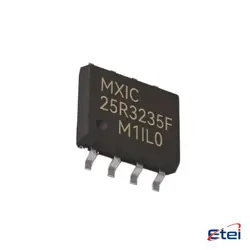
Hình ảnh chỉ để tham khảo
OPA388QDBVRQ1
+BOM-
Nhà sản xuấtTexas Dụng cụ
-
Ông. Phần #OPA388QDBVRQ1
-
Có sẵn5215
365 Đảm bảo chất lượng ngày
7*24 giờ dịch vụ quarantee
90-Bảo hành sau bán hàng ngày
Bảo hành sản phẩm chính xác
Thông số kỹ thuật
| thuộc tính | Giá trị |
| Package / Case | Tape & Reel (TR),Cut Tape (CT) |
| Series | Automotive, AEC-Q100, Zero-Drift |
| Part Status | Active |
| Amplifier Type | Zero-Drift |
| Number of Circuits | 1 |
| Output Type | Rail-to-Rail |
| Slew Rate | 5V/µs |
| Gain Bandwidth Product | 10 MHz |
| Current - Input Bias | 30 pA |
| Voltage - Input Offset | 0.25 µV |
| Supply Current | 1.9mA |
| Current - Output / Channel | 60 mA |
| Voltage - Supply Span(Min) | 2.5 V |
| Voltage - Supply Span(Max) | 5.5 V |
| Operating Temperature | -40°C ~ 125°C (TA) |
| Mounting Type | Surface Mount |
Tổng quan
Description
The OPA388QDBVRQ1 is a precision operational amplifier from Texas Instruments, designed for automotive and other high-precision applications. It features zero-drift architecture, which offers ultra-low offset voltage and near-zero offset drift over time and temperature. This ensures high accuracy and stability in measurements, making it ideal for precision sensor applications.
The amplifier operates with a wide supply voltage range, typically from 4.5 V to 36 V, and provides rail-to-rail input and output, enhancing its versatility across different circuit designs. The OPA388QDBVRQ1 delivers low noise performance, crucial for applications requiring precise signal amplification with minimal interference.
It is available in standard automotive grade packaging and meets AEC-Q100 standards, ensuring reliability and compliance with automotive industry requirements. The package type is typically SOT-23, which supports compact designs. Additionally, the device supports a wide temperature range, making it suitable for various environmental conditions in automotive settings.
Overall, the OPA388QDBVRQ1 is engineered for high precision, stability, and robustness, crucial for demanding automotive and industrial electronics applications.
The amplifier operates with a wide supply voltage range, typically from 4.5 V to 36 V, and provides rail-to-rail input and output, enhancing its versatility across different circuit designs. The OPA388QDBVRQ1 delivers low noise performance, crucial for applications requiring precise signal amplification with minimal interference.
It is available in standard automotive grade packaging and meets AEC-Q100 standards, ensuring reliability and compliance with automotive industry requirements. The package type is typically SOT-23, which supports compact designs. Additionally, the device supports a wide temperature range, making it suitable for various environmental conditions in automotive settings.
Overall, the OPA388QDBVRQ1 is engineered for high precision, stability, and robustness, crucial for demanding automotive and industrial electronics applications.
Equivalent
The OPA388QDBVRQ1 is a precision operational amplifier from Texas Instruments. Equivalent products would typically include similar precision op-amps from other manufacturers. Some alternatives could include:
1. Analog Devices ADA4522
2. Maxim Integrated MAX44246
3. STMicroelectronics TSZ121
These alternatives should be checked for specific parameter compatibility like voltage range, input offset voltage, and bandwidth to ensure they meet application requirements.
1. Analog Devices ADA4522
2. Maxim Integrated MAX44246
3. STMicroelectronics TSZ121
These alternatives should be checked for specific parameter compatibility like voltage range, input offset voltage, and bandwidth to ensure they meet application requirements.
Features
The OPA388QDBVRQ1 is a precision operational amplifier designed for automotive and other precision applications. Key features include:
1. Zero-Drift Architecture: Provides ultra-low offset voltage and near-zero offset drift over time and temperature.
2. High Precision: Features a low input offset voltage of 0.25 μV and a low drift of 0.005 μV/°C.
3. Low Noise: Offers a low noise density of 7 nV/√Hz, making it suitable for precision signal processing.
4. Wide Supply Range: Operates on a wide supply voltage range from 4.5 V to 36 V, or ±2.25 V to ±18 V.
5. Rail-to-Rail Input and Output: Supports rail-to-rail input and output, enhancing dynamic range.
6. High-Performance Over Temperature: Ensures reliable performance across an extended automotive temperature range of –40°C to 125°C.
7. Automotive-Qualified: AEC-Q100 qualified for automotive applications, ensuring robustness in demanding environments.
8. Small Package: Available in a compact SOT-23 package, making it suitable for space-constrained designs.
These features make the OPA388QDBVRQ1 ideal for applications requiring high precision and reliability, such as sensor signal conditioning and active filtering.
1. Zero-Drift Architecture: Provides ultra-low offset voltage and near-zero offset drift over time and temperature.
2. High Precision: Features a low input offset voltage of 0.25 μV and a low drift of 0.005 μV/°C.
3. Low Noise: Offers a low noise density of 7 nV/√Hz, making it suitable for precision signal processing.
4. Wide Supply Range: Operates on a wide supply voltage range from 4.5 V to 36 V, or ±2.25 V to ±18 V.
5. Rail-to-Rail Input and Output: Supports rail-to-rail input and output, enhancing dynamic range.
6. High-Performance Over Temperature: Ensures reliable performance across an extended automotive temperature range of –40°C to 125°C.
7. Automotive-Qualified: AEC-Q100 qualified for automotive applications, ensuring robustness in demanding environments.
8. Small Package: Available in a compact SOT-23 package, making it suitable for space-constrained designs.
These features make the OPA388QDBVRQ1 ideal for applications requiring high precision and reliability, such as sensor signal conditioning and active filtering.
Pinout
The OPA388QDBVRQ1 is a precision operational amplifier by Texas Instruments. It comes in a SOT-23 package with a pin count of 5. The functions of the pins are as follows:
1. V+ (Positive Supply Voltage): Connected to the positive power supply.
2. V- (Negative Supply Voltage): Connected to the negative power supply or ground in single-supply configurations.
3. IN+ (Non-Inverting Input): The non-inverting input terminal of the op-amp.
4. IN- (Inverting Input): The inverting input terminal of the op-amp.
5. OUT (Output): The output terminal of the op-amp.
These pin functions support the OPA388QDBVRQ1's use in precision applications, offering features such as low offset voltage, low drift, and rail-to-rail input and output.
1. V+ (Positive Supply Voltage): Connected to the positive power supply.
2. V- (Negative Supply Voltage): Connected to the negative power supply or ground in single-supply configurations.
3. IN+ (Non-Inverting Input): The non-inverting input terminal of the op-amp.
4. IN- (Inverting Input): The inverting input terminal of the op-amp.
5. OUT (Output): The output terminal of the op-amp.
These pin functions support the OPA388QDBVRQ1's use in precision applications, offering features such as low offset voltage, low drift, and rail-to-rail input and output.
Manufacturer
The OPA388QDBVRQ1 is manufactured by Texas Instruments. Texas Instruments, often abbreviated as TI, is an American technology company that designs and manufactures semiconductors and various integrated circuits. Its products are used in a wide array of electronic devices and systems. TI is known for its innovation in the electronics industry, providing solutions across the automotive, industrial, personal electronics, and communications equipment markets.
Application
The OPA388QDBVRQ1 is a precision operational amplifier designed for automotive and industrial applications. Key application areas include:
1. Automotive Systems: Used in engine control units, sensor signal conditioning, and electric power steering systems due to its high precision and stability.
2. Industrial Automation: Suitable for process control, instrumentation, and data acquisition systems where high accuracy and low noise are crucial.
3. Medical Devices: Used in diagnostic equipment requiring precision signal amplification.
4. Consumer Electronics: Applied in audio equipment and other devices needing accurate signal processing.
Its robust design makes it ideal for environments requiring high reliability and performance.
1. Automotive Systems: Used in engine control units, sensor signal conditioning, and electric power steering systems due to its high precision and stability.
2. Industrial Automation: Suitable for process control, instrumentation, and data acquisition systems where high accuracy and low noise are crucial.
3. Medical Devices: Used in diagnostic equipment requiring precision signal amplification.
4. Consumer Electronics: Applied in audio equipment and other devices needing accurate signal processing.
Its robust design makes it ideal for environments requiring high reliability and performance.
Package
The OPA388QDBVRQ1 is packaged in a SOT-23-6 package, which is a small outline transistor package with 6 pins. This package type is commonly used for surface-mounted devices in compact electronic applications.