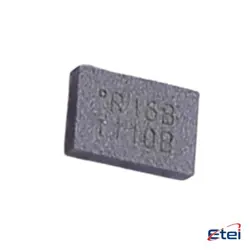
Hình ảnh chỉ để tham khảo
PBSS4220PANS
+BOM20 V, 2 A NPN/NPN LOW VCESAT BIS
-
Nhà sản xuấtNexperia Hoa Kỳ Inc.
-
Ông. Phần #PBSS4220PANS
-
Bảng dữ liệu PBSS4220PANS DataSheet
-
Có sẵn5594
365 Đảm bảo chất lượng ngày
7*24 giờ dịch vụ quarantee
90-Bảo hành sau bán hàng ngày
Bảo hành sản phẩm chính xác
Thông số kỹ thuật
| thuộc tính | Giá trị |
| Package | Bulk |
| ProductStatus | Active |
Tổng quan
Description
To give a concise introduction, it's important to know what PBSS4220PANS stands for. It could be related to a particular field such as engineering, sciences, humanities, or another academic discipline. Typically, an introductory course would cover foundational concepts, key theories, and essential skills related to the topic, aiming to provide students with a comprehensive overview and prepare them for more advanced study.
For a more detailed description, please provide additional context or check the institution's official course catalog or website for the specific course description.
Equivalent
Features
1. Type: NPN Silicon Phototransistor.
2. Wavelength Sensitivity: It is sensitive to infrared light, often peaking around 880 nm.
3. Package: Comes in a compact package suitable for surface mounting, enhancing its utility in various compact electronic devices.
4. Operating Voltage: It operates at a collector-emitter voltage typically up to 30V.
5. Collector Current: Can handle a maximum collector current, typically around 20mA.
6. Response Time: Generally offers a fast response time, making it suitable for fast-switching applications.
7. Applications: Commonly used in infrared sensing applications, such as remote controls, optical encoders, and object detection systems.
8. Temperature Range: Operates effectively within a specified temperature range, ensuring reliability in different environmental conditions.
These features make it a versatile component in designing electronic circuits that require light sensing and detection capabilities.
Pinout
1. Pin 1 (Emitter): The emitter is the terminal where current flows out of the transistor.
2. Pin 2 (Base): The base terminal controls the transistor's operation and is used to turn the transistor on or off.
3. Pin 3 (Collector): The collector is the terminal through which current flows into the transistor when it is in the "on" state.
This transistor is commonly used for amplification and switching applications in electronic circuits, offering a balance between performance and size suitable for moderate power handling. Always refer to the device's datasheet for detailed specifications and proper usage.