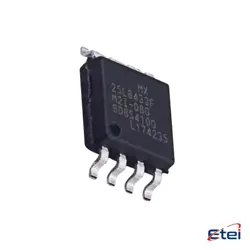
Hình ảnh chỉ để tham khảo
PS2805-4
+BOMOPTOISOLATOR 2.5KV 4CH TRANS
-
Nhà sản xuấtCEL
-
Ông. Phần #PS2805-4
-
Có sẵn13450
365 Đảm bảo chất lượng ngày
7*24 giờ dịch vụ quarantee
90-Bảo hành sau bán hàng ngày
Bảo hành sản phẩm chính xác
Thông số kỹ thuật
| thuộc tính | Giá trị |
| Series | NEPOC |
| Part Status | Obsolete |
| Number of Channels | 4 |
| Voltage - Isolation | 2500Vrms |
| Current Transfer Ratio (Min) | 80% @ 5mA |
| Current Transfer Ratio (Max) | 600% @ 5mA |
| Rise / Fall Time (Typ) | 3µs, 5µs |
| Input Type | AC, DC |
| Output Type | Transistor |
| Voltage - Output (Max) | 80V |
| Current - Output / Channel | 50mA |
| Voltage - Forward (Vf) (Typ) | 1.1V |
| Current - DC Forward (If) (Max) | 50 mA |
| Vce Saturation (Max) | 300mV |
| Operating Temperature | -55°C ~ 100°C |
| Mounting Type | Surface Mount |
| Package | 16-SOIC (0.173", 4.40mm Width) |
| Packaging | Tube |
Tổng quan
Description
PS2805-4 likely refers to a specific course code at a university or college. Without specific details about the course, I can provide a general structure of what an introduction to such a course might include:
Course Title and Description:
The introduction to PS2805-4 would typically include the course title, which might relate to a specific field such as psychology, political science, or any other academic discipline, depending on the institution's course catalog. The description would summarize the main topics covered, learning objectives, and the relevance of the course within the broader curriculum.
Key Objectives:
- To provide foundational knowledge in the subject area.
- To develop critical thinking and analytical skills relevant to the field.
- To introduce students to major theories, methodologies, and research findings.
Structure and Requirements:
The course might be structured around lectures, seminars, and practical sessions. Evaluation methods could include exams, assignments, and projects.
Prerequisites:
Any required previous coursework or knowledge necessary to enroll.
To get more specific information, you should refer to the course syllabus or contact the academic department offering the course.
Course Title and Description:
The introduction to PS2805-4 would typically include the course title, which might relate to a specific field such as psychology, political science, or any other academic discipline, depending on the institution's course catalog. The description would summarize the main topics covered, learning objectives, and the relevance of the course within the broader curriculum.
Key Objectives:
- To provide foundational knowledge in the subject area.
- To develop critical thinking and analytical skills relevant to the field.
- To introduce students to major theories, methodologies, and research findings.
Structure and Requirements:
The course might be structured around lectures, seminars, and practical sessions. Evaluation methods could include exams, assignments, and projects.
Prerequisites:
Any required previous coursework or knowledge necessary to enroll.
To get more specific information, you should refer to the course syllabus or contact the academic department offering the course.
Equivalent
The PS2805-4 is a quad-channel optocoupler with phototransistor output. Equivalent products include:
1. Fairchild 4N35 Series: These are also optocouplers with phototransistor outputs.
2. Toshiba TLP280-4: Another quad-channel phototransistor optocoupler.
3. Vishay ILQ615: A similar quad-channel optocoupler.
4. Lite-On LTV-817 Series: Offers similar functionality with phototransistor output options.
Always check datasheets for compatibility regarding specific features and performance.
1. Fairchild 4N35 Series: These are also optocouplers with phototransistor outputs.
2. Toshiba TLP280-4: Another quad-channel phototransistor optocoupler.
3. Vishay ILQ615: A similar quad-channel optocoupler.
4. Lite-On LTV-817 Series: Offers similar functionality with phototransistor output options.
Always check datasheets for compatibility regarding specific features and performance.
Features
The PS2805-4 is a type of optoisolator or photocoupler, which is used to transfer electrical signals using light waves to provide electrical isolation between different parts of a system. This component typically features:
1. Isolation: Provides galvanic isolation between input and output, preventing high voltages from affecting the system receiving the signal.
2. Input/Output: Contains a phototransistor output that responds to an infrared LED input, allowing signal transfer with isolation.
3. Compact Package: Available in a small, space-saving package suitable for various electronic applications.
4. High-Speed Operation: Generally supports faster signal transmission compared to traditional relays.
5. High Noise Immunity: Offers protection from electrical noise, making it ideal for interfacing between high and low voltage systems.
6. Wide Operating Temperature Range: Suitable for various environmental conditions.
7. Low Power Consumption: Efficient operation with low current requirements, making it suitable for battery-powered devices.
These features make the PS2805-4 apt for applications in microprocessor systems, data communication, and switching power supplies.
1. Isolation: Provides galvanic isolation between input and output, preventing high voltages from affecting the system receiving the signal.
2. Input/Output: Contains a phototransistor output that responds to an infrared LED input, allowing signal transfer with isolation.
3. Compact Package: Available in a small, space-saving package suitable for various electronic applications.
4. High-Speed Operation: Generally supports faster signal transmission compared to traditional relays.
5. High Noise Immunity: Offers protection from electrical noise, making it ideal for interfacing between high and low voltage systems.
6. Wide Operating Temperature Range: Suitable for various environmental conditions.
7. Low Power Consumption: Efficient operation with low current requirements, making it suitable for battery-powered devices.
These features make the PS2805-4 apt for applications in microprocessor systems, data communication, and switching power supplies.
Pinout
The PS2805-4 is an optocoupler integrated circuit, specifically a photocoupler, consisting of four optically isolated channels. It is used to transfer electrical signals between two isolated circuits through an optical signal.
The PS2805-4 typically comes in an 16-pin package, with each channel having its own input and output pins. Here's a general pin configuration for the device:
1. Pins 1-4: Anode of the input LED for channels 1-4.
2. Pins 5-8: Cathode of the input LED for channels 1-4.
3. Pins 9-12: Emitter of the phototransistor output for channels 1-4.
4. Pins 13-16: Collector of the phototransistor output for channels 1-4.
Each optocoupler channel operates by using a light-emitting diode (LED) to transmit a signal to a phototransistor, providing electrical isolation between the input and output. This isolation is vital for protecting sensitive components and systems from high-voltage surges or noise, making the PS2805-4 suitable for applications like signal isolation in microcontroller interfaces, data communication, and industrial automation.
The PS2805-4 typically comes in an 16-pin package, with each channel having its own input and output pins. Here's a general pin configuration for the device:
1. Pins 1-4: Anode of the input LED for channels 1-4.
2. Pins 5-8: Cathode of the input LED for channels 1-4.
3. Pins 9-12: Emitter of the phototransistor output for channels 1-4.
4. Pins 13-16: Collector of the phototransistor output for channels 1-4.
Each optocoupler channel operates by using a light-emitting diode (LED) to transmit a signal to a phototransistor, providing electrical isolation between the input and output. This isolation is vital for protecting sensitive components and systems from high-voltage surges or noise, making the PS2805-4 suitable for applications like signal isolation in microcontroller interfaces, data communication, and industrial automation.
Manufacturer
The PS2805-4 is manufactured by Renesas Electronics Corporation. Renesas is a Japanese semiconductor company that specializes in the design and production of microcontrollers, mixed-signal integrated circuits, and system-on-chip solutions. The company is known for its expertise in automotive, industrial, home electronics, and information communication technology sectors. Formed through the merger of NEC Electronics Corporation and Renesas Technology in 2010, Renesas has since grown to become one of the world's leading semiconductor companies. Their products support a wide array of applications, ranging from consumer electronics to automotive industry systems, providing essential components that enable advanced functionalities and improved efficiencies in various technological applications.
Application
PS2805-4 is a material that can be used in various application areas. It is often utilized in the manufacturing of electronic components due to its thermal stability and electrical insulation properties. Additionally, it finds applications in the automotive industry, particularly in components that require high resistance to heat and chemicals. In aerospace, PS2805-4 is used for its lightweight and durable characteristics, making it suitable for parts that need to withstand extreme conditions. Furthermore, it is applied in consumer electronics for components that need reliable performance and longevity. Its versatile properties make it valuable in any industry requiring materials that can endure harsh environmental conditions.
Package
The PS2805-4 is typically provided in a 16-pin SSOP (Shrink Small Outline Package), which is a surface-mount package style often used for optoisolators and other integrated circuits.