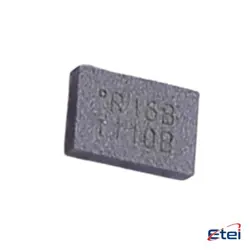
Hình ảnh chỉ để tham khảo
SN65HVD232DR
+BOMIC TRANSCEIVER HALF 1/1 8SOIC
-
Nhà sản xuấtTexas Dụng cụ
-
Ông. Phần #SN65HVD232DR
-
Gói SOIC (D)-8
-
Có sẵn5819
365 Đảm bảo chất lượng ngày
7*24 giờ dịch vụ quarantee
90-Bảo hành sau bán hàng ngày
Bảo hành sản phẩm chính xác
Thông số kỹ thuật
| thuộc tính | Giá trị |
| Package | Tape & Reel (TR),Cut Tape (CT) |
| ProductStatus | Active |
| Type | Transceiver |
| Protocol | CANbus |
| NumberofDrivers/Receivers | 1/1 |
| Duplex | Half |
| ReceiverHysteresis | 100 mV |
| DataRate | 1Mbps |
| Voltage-Supply | 3V ~ 3.6V |
| OperatingTemperature | -40°C ~ 85°C |
| MountingType | Surface Mount |
| Package/Case | 8-SOIC (0.154, 3.90mm Width) |
Tổng quan
Description
Key features of the SN65HVD232DR include a high data transmission rate of up to 1 Mbps, ensuring efficient data handling in high-speed networks. It incorporates both dominant and recessive state signaling, crucial for CAN network operations. The transceiver is equipped with thermal shutdown protection and can withstand high levels of electromagnetic interference, making it suitable for harsh environments.
The SN65HVD232DR is housed in an 8-pin SOIC (Small Outline Integrated Circuit) package. Its low power consumption and ability to handle extended common-mode range make it ideal for battery-powered or distant CAN nodes. Overall, it enhances network reliability and performance in demanding applications.
Equivalent
1. MCP2551 by Microchip Technology: A high-speed CAN transceiver.
2. TJA1050 by NXP Semiconductors: A high-speed CAN transceiver.
3. ADM3053 by Analog Devices: An isolated CAN transceiver.
4. ISO1050 by Texas Instruments: An isolated CAN transceiver.
5. MAX3051 by Maxim Integrated: A high-speed CAN transceiver.
These equivalents offer similar functionality for CAN communication applications.
Features
1. CAN Protocol Compatibility: Supports the ISO 11898-2 standard for high-speed (up to 1 Mbps) communications.
2. Low Power Consumption: Offers low current consumption with a standby mode that reduces power usage for energy-efficient operation.
3. Wide Supply Voltage Range: Operates from 3.3V, making it suitable for applications that require lower voltages.
4. Thermal and Short-Circuit Protection: Includes thermal shutdown and short-circuit protection to enhance reliability and prevent damage.
5. ESD Protection: High level of electrostatic discharge protection, enhancing durability in harsh environments.
6. Bus-Fault Protection: Can withstand voltage differences up to ±36V, protecting against bus pin faults.
7. Differential Input/Output: Provides robust communication in electrically noisy environments with differential signaling.
8. Slew Rate Control: Reduces electromagnetic interference (EMI) by controlling the slew rate of the signal.
9. Compact Package: Available in a small SOIC-8 package, facilitating easy integration into designs.
These features make the SN65HVD232DR suitable for automotive, industrial, and other applications requiring reliable CAN communication.
Pinout
1. Pin 1 (D): Driver input; connected to the microcontroller's CAN transmit pin.
2. Pin 2 (R): Receiver output; connected to the microcontroller's CAN receive pin.
3. Pin 3 (Vcc): Supply voltage; typically 3.3V.
4. Pin 4 (GND): Ground; connected to the system ground.
5. Pin 5 (CANH): CAN bus line high; connects to the high line of the CAN bus.
6. Pin 6 (CANL): CAN bus line low; connects to the low line of the CAN bus.
7. Pin 7 (Rs): Slope resistor; used to control the slew rate and reduce EMI by connecting an external resistor to ground.
8. Pin 8 (EN): Enable; used to switch between normal operation and standby mode.
This configuration allows the transceiver to facilitate communication between the microcontroller and the CAN bus, enabling data exchange in a robust and efficient manner.
Manufacturer
Application
1. Automotive Systems: Enables communication between different vehicle components like engine control units, airbags, ABS, and infotainment systems.
2. Industrial Automation: Facilitates communication in factory automation systems, such as robotic controllers and industrial equipment.
3. Building Automation: Used in HVAC systems, lighting controls, and security systems for efficient building management.
4. Medical Devices: Allows for reliable data exchange between medical instruments and monitoring systems.
5. Consumer Electronics: Integrates into appliances for smart home solutions and advanced electronic functionalities.