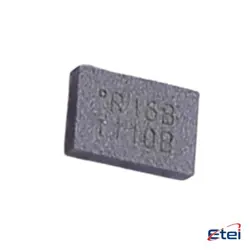
Hình ảnh chỉ để tham khảo
SSD101
+BOM-
Nhà sản xuấtJLCPCB Assembly
-
Ông. Phần #SSD101
-
Có sẵn24063
365 Đảm bảo chất lượng ngày
7*24 giờ dịch vụ quarantee
90-Bảo hành sau bán hàng ngày
Bảo hành sản phẩm chính xác
Thông số kỹ thuật
| thuộc tính | Giá trị |
| Manufacturer | JLCPCB Assembly |
| Package | LQFP7X7-64P |
Tổng quan
Description
Introduction to SSD101
SSD101 is an introductory course designed to provide foundational knowledge in Social Sciences and Development Studies. It covers key concepts like social structures, development theories, and global inequalities, helping students understand societal dynamics and policy impacts.
The course typically explores:
- Basic social science theories (e.g., modernization, dependency).
- Development challenges (poverty, governance, sustainability).
- Research methods for analyzing social issues.
Through lectures, readings, and discussions, SSD101 equips students with critical thinking skills to evaluate development policies and societal trends. It serves as a gateway for advanced studies in fields like sociology, economics, or international development.
Ideal for students pursuing careers in social sciences, public policy, or NGOs.
SSD101 is an introductory course designed to provide foundational knowledge in Social Sciences and Development Studies. It covers key concepts like social structures, development theories, and global inequalities, helping students understand societal dynamics and policy impacts.
The course typically explores:
- Basic social science theories (e.g., modernization, dependency).
- Development challenges (poverty, governance, sustainability).
- Research methods for analyzing social issues.
Through lectures, readings, and discussions, SSD101 equips students with critical thinking skills to evaluate development policies and societal trends. It serves as a gateway for advanced studies in fields like sociology, economics, or international development.
Ideal for students pursuing careers in social sciences, public policy, or NGOs.
Equivalent
The SSD101 is a display driver chip for OLED panels. Equivalent or similar products include:
- SSD1306 (common for smaller OLEDs)
- SSD1327 (supports grayscale)
- SH1106 (compatible but with slight differences)
- SSD1351 (for color OLEDs)
- SSD1331 (another color OLED driver)
These alternatives vary in features like resolution, color support, and interface (I2C/SPI). Choose based on your display requirements.
- SSD1306 (common for smaller OLEDs)
- SSD1327 (supports grayscale)
- SH1106 (compatible but with slight differences)
- SSD1351 (for color OLEDs)
- SSD1331 (another color OLED driver)
These alternatives vary in features like resolution, color support, and interface (I2C/SPI). Choose based on your display requirements.
Pinout
The SSD101 is a display driver IC commonly used for OLED panels. It typically comes in a 48-pin package (e.g., TQFP-48).
Key Functions:
- Interface: Supports 8-bit parallel (6800/8080) and 3-/4-wire SPI.
- Display Control: Drives up to 128x64 resolution OLEDs, handling grayscale and brightness adjustment.
- Power Management: Includes built-in DC-DC converters for efficient power supply.
- Memory: Integrated GDDRAM for display data storage.
Pins are allocated for power (VCC, VDD), ground (GND), control signals (RESET, CS, D/C), and data lines (D0-D7 for parallel mode).
Key Functions:
- Interface: Supports 8-bit parallel (6800/8080) and 3-/4-wire SPI.
- Display Control: Drives up to 128x64 resolution OLEDs, handling grayscale and brightness adjustment.
- Power Management: Includes built-in DC-DC converters for efficient power supply.
- Memory: Integrated GDDRAM for display data storage.
Pins are allocated for power (VCC, VDD), ground (GND), control signals (RESET, CS, D/C), and data lines (D0-D7 for parallel mode).
Application
The SSD101 is a monochrome OLED display controller, commonly used in:
1. Small Displays – Powering compact OLED screens in wearables, IoT devices, and portable gadgets.
2. Industrial HMI – Embedded in control panels and instrumentation for clear, low-power readouts.
3. Medical Devices – Providing sharp visuals in handheld diagnostic tools and monitors.
4. Consumer Electronics – Used in smart home interfaces, e-readers, and secondary displays.
5. Automotive – Supporting dashboard indicators and infotainment systems.
Its efficiency, simplicity, and compatibility with microcontrollers make it ideal for low-power, high-contrast display applications.
1. Small Displays – Powering compact OLED screens in wearables, IoT devices, and portable gadgets.
2. Industrial HMI – Embedded in control panels and instrumentation for clear, low-power readouts.
3. Medical Devices – Providing sharp visuals in handheld diagnostic tools and monitors.
4. Consumer Electronics – Used in smart home interfaces, e-readers, and secondary displays.
5. Automotive – Supporting dashboard indicators and infotainment systems.
Its efficiency, simplicity, and compatibility with microcontrollers make it ideal for low-power, high-contrast display applications.