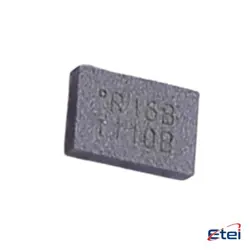
Hình ảnh chỉ để tham khảo
STA540
+BOMIC AMP AB DUAL/QUAD 15MULTIWATT
-
Nhà sản xuấtSTMicroelectronics
-
Ông. Phần #STA540
-
Bảng dữ liệu STA540 DataSheet
-
Có sẵn5674
365 Đảm bảo chất lượng ngày
7*24 giờ dịch vụ quarantee
90-Bảo hành sau bán hàng ngày
Bảo hành sản phẩm chính xác
Thông số kỹ thuật
| thuộc tính | Giá trị |
| Package / Case | Tube |
| Part Status | Active |
| Type | Class AB |
| Output Type | 2-Channel (Stereo) or 4-Channel (Quad) |
| Max Output Powerx Channels @ Load | 38W x 2 @ 4Ohm; 16W x 4 @ 4Ohm |
| Voltage - Supply | 8V ~ 22V |
| Features | Short-Circuit and Thermal Protection, Standby |
| Mounting Type | Through Hole |
| Operating Temperature | 0°C ~ 70°C (TA) |
| Supplier Device Package | 15-Multiwatt |
Tổng quan
Description
Key topics may include multivariate normal distribution, principal component analysis (PCA), factor analysis, cluster analysis, discriminant analysis, and multivariate regression. These techniques are essential for analyzing data where multiple variables influence outcomes and are common in fields such as social sciences, biology, and finance.
Students in STA540 are usually expected to have a background in basic statistics and linear algebra, as the course builds on these foundations. Practical application is often emphasized, with students working on real-world datasets using statistical software like R or Python.
Overall, STA540 provides a comprehensive understanding of multivariate methods, enabling students to apply these techniques effectively in research or professional settings.
Equivalent
Features
1. Statistical Theory: Understanding foundational statistical concepts and methodologies.
2. Data Analysis: Techniques for processing and analyzing data, including data cleaning and transformation.
3. Modeling: Building and interpreting statistical models, such as regression models, ANOVA, and generalized linear models.
4. Statistical Software: Use of software tools like R, SAS, or Python for data analysis and visualization.
5. Inference: Understanding and applying hypothesis testing and confidence intervals.
6. Applications: Real-world applications of statistical methods in various fields such as economics, biology, and social sciences.
7. Experimental Design: Principles and practices of designing experiments to ensure valid and reliable results.
8. Data Visualization: Techniques for effectively visualizing data to communicate findings.
9. Advanced Topics: Depending on the course, it might also cover time series analysis, multivariate statistics, or machine learning basics.
These elements aim to equip students with the skills necessary for effective statistical analysis and decision-making in professional or research settings.
Pinout
1. Inverting Inputs (IN1, IN2): Two pins for negative input signals for each channel.
2. Non-Inverting Inputs (IN3, IN4): Two pins for positive input signals for each channel.
3. Bootstrap Capacitor Connections (BOOT1, BOOT2): Two pins for bootstrap capacitors, enhancing the operation of the output stage for each channel.
4. Output Pins (OUT1, OUT2): Two pins for audio output for each channel.
5. Supply Voltage Pins (VCC): Multiple pins for positive supply voltage.
6. Ground Pins (GND): Multiple pins for ground connection.
7. Standby and Mute Control Pins: Control pins to enable standby and mute functions, reducing power consumption and noise.
8. Heatsink/Fins: Some packages may include fins for heat dissipation.
This configuration allows the STA540 to deliver high-quality audio performance while providing necessary controls for efficient operation and thermal management.