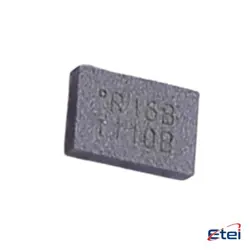
Hình ảnh chỉ để tham khảo
STM32F103VET6TR
+BOMIC MCU 32BIT 512KB FLASH 100LQFP
-
Nhà sản xuấtSTMicroelectronics
-
Ông. Phần #STM32F103VET6TR
-
Bảng dữ liệu STM32F103VET6TR DataSheet
-
Gói LQFP-100
-
Có sẵn3175
365 Đảm bảo chất lượng ngày
7*24 giờ dịch vụ quarantee
90-Bảo hành sau bán hàng ngày
Bảo hành sản phẩm chính xác
Thông số kỹ thuật
| thuộc tính | Giá trị |
| Package / Case | Tape & Reel (TR),Cut Tape (CT) |
| Series | STM32F1 |
| Part Status | Active |
| Core Processor | ARM® Cortex®-M3 |
| Core Size | 32-Bit Single-Core |
| Speed | 72MHz |
| Connectivity | CANbus, I²C, IrDA, LINbus, SPI, UART/USART, USB |
| Peripherals | DMA, Motor Control PWM, PDR, POR, PVD, PWM, Temp Sensor, WDT |
| Number of I/O | 80 |
| Program Memory Size | 512KB (512K x 8) |
| Program Memory Type | FLASH |
| RAM Size | 64K x 8 |
| Voltage - Supply (Vcc/Vdd) | 2V ~ 3.6V |
| Data Converters | A/D 16x12b; D/A 2x12b |
| Oscillator Type | Internal |
| Operating Temperature | -40°C ~ 85°C (TA) |
| Mounting Type | Surface Mount |
Tổng quan
Description
The device also supports advanced motor control and digital signal processing. Its power management features include several low-power modes, making it ideal for battery-powered devices. The STM32F103VET6TR comes in a 100-pin LQFP package, providing numerous GPIOs and peripheral interfaces. It is commonly used in applications like industrial control, consumer electronics, and data acquisition systems. The microcontroller is supported by a robust ecosystem, including the STM32Cube software platform and a variety of development tools, facilitating prototyping and development.
Equivalent
1. NXP: LPC1768
2. Microchip (Atmel): ATSAM3X8E
3. Texas Instruments: TM4C123GH6PM
4. Renesas: R5F563N8 (RX63)
5. Silicon Labs: EFM32GG990F1024
These alternatives have similar performance and peripherals, but compatibility should be checked based on specific application requirements.
Features
- Core: ARM Cortex-M3 running at 72 MHz.
- Memory: 512 KB of Flash memory and 64 KB of SRAM.
- Operating Voltage: 2.0 to 3.6 V.
- I/O Pins: 80 GPIOs with multiple functionalities.
- Timers: 10 timers, including advanced-control, general-purpose, and basic timers.
- Communication Interfaces:
- 3 USARTs
- 2 SPIs
- 2 I2Cs
- 1 CAN
- USB 2.0 full-speed device/host/OTG.
- ADCs/DACs:
- 3 12-bit ADCs
- 2 12-bit DACs.
- DMA: 7-channel DMA controller.
- Power-saving Modes: Sleep, Stop, and Standby.
- Temperature Range: -40 to 85°C (industrial).
This microcontroller targets applications requiring real-time performance, low power, and multiple interfacing options, such as automotive, industrial, and consumer electronics.
Pinout
Key features include:
- CPU: ARM Cortex-M3, 72 MHz.
- Flash Memory: 512 KB.
- SRAM: 64 KB.
- Peripherals: Includes timers, ADCs, DACs, and communication interfaces (USART, SPI, I2C, USB, CAN).
- Pin Count: 100 pins.
- Functionality: General-purpose microcontroller suitable for applications like motor control, industrial automation, consumer electronics, and more.
The STM32F103VET6TR provides various functionalities supporting digital and analog interfacing, communication protocols, and real-time processing. Its extensive peripheral set and memory resources make it suitable for complex embedded applications.
Manufacturer
STMicroelectronics is recognized for its innovation in microcontroller technology and provides solutions for various applications, including embedded systems, sensor technologies, and power management. The STM32 series, which includes the STM32F103VET6TR, is part of their microcontroller product line, widely used in industrial automation, consumer electronics, and other applications requiring reliable and efficient processing capabilities.
Application
1. Industrial Automation: Used in PLCs and motor control systems for precise operation.
2. Consumer Electronics: Found in home appliances for control and automation tasks.
3. Automotive Systems: Utilized in infotainment systems and vehicle control units.
4. Medical Devices: Employed in portable medical equipment for data processing.
5. IoT Devices: Acts as the main controller for smart devices and sensors.
6. Robotics: Integral in robotic control systems for motion and navigation.
7. Communication Systems: Used in networking devices for managing protocols.
Its processing power, connectivity options, and energy efficiency make it suitable for these diverse applications.