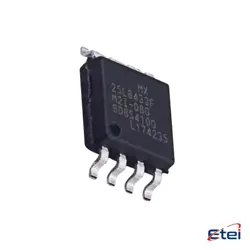
Hình ảnh chỉ để tham khảo
STM32F103ZFT6
+BOMIC MCU 32BIT 768KB FLASH 144LQFP
-
Nhà sản xuấtSTMicroelectronics
-
Ông. Phần #STM32F103ZFT6
-
Bảng dữ liệu STM32F103ZFT6 DataSheet
-
Gói LQFP-144
-
Có sẵn1304
365 Đảm bảo chất lượng ngày
7*24 giờ dịch vụ quarantee
90-Bảo hành sau bán hàng ngày
Bảo hành sản phẩm chính xác
Thông số kỹ thuật
| thuộc tính | Giá trị |
| Package | Tray |
| Series | STM32F1 |
| ProductStatus | Active |
| CoreProcessor | ARM® Cortex®-M3 |
| CoreSize | 32-Bit Single-Core |
| Speed | 72MHz |
| Connectivity | CANbus, I²C, IrDA, LINbus, SPI, UART/USART, USB |
| Peripherals | DMA, Motor Control PWM, PDR, POR, PVD, PWM, Temp Sensor, WDT |
| NumberofI/O | 112 |
| ProgramMemorySize | 768KB (768K x 8) |
| ProgramMemoryType | FLASH |
| RAMSize | 96K x 8 |
| Voltage-Supply(Vcc/Vdd) | 2V ~ 3.6V |
| DataConverters | A/D 21x12b; D/A 2x12b |
| OscillatorType | Internal |
| OperatingTemperature | -40°C ~ 85°C (TA) |
| MountingType | Surface Mount |
| Package/Case | 144-LQFP |
Tổng quan
Description
Key features include:
- Memory: It comes with 512 KB of Flash memory and 64 KB of SRAM, suitable for complex applications.
- I/O Pins: The microcontroller offers up to 112 GPIO pins, allowing extensive connectivity options.
- Peripherals: It supports multiple communication protocols, including USART, SPI, I2C, and CAN, making it versatile for various applications.
- Timers: The presence of advanced timers aids in applications requiring precise timing like PWM generation.
- ADC/DAC: With a 12-bit ADC and DAC, it supports analog sensor interfacing.
The STM32F103ZFT6 is commonly used in automotive, industrial control, and consumer electronics due to its balance between performance and power consumption. Its development is supported by a broad ecosystem, including ST’s CubeMX for configuration and a variety of IDEs for coding.
Equivalent
1. NXP LPC1768 - ARM Cortex-M3 based microcontroller.
2. Microchip ATSAM3X8E - ARM Cortex-M3 based microcontroller.
3. Texas Instruments TM4C123GH6PM - ARM Cortex-M4 based microcontroller.
4. Infineon XMC4500 - ARM Cortex-M4 based microcontroller.
These alternatives offer similar functionalities and performance with slight variations in peripherals and features.
Features
- Core: ARM Cortex-M3 32-bit RISC core, operating at up to 72 MHz.
- Memory: 512 KB Flash memory and 64 KB SRAM.
- Operating Voltage: 2.0 to 3.6 V.
- Peripherals:
- Timers: 16-bit and 32-bit timers, including PWM and capture/compare modes.
- Communication Interfaces:
- USART (Universal Synchronous/Asynchronous Receiver/Transmitter).
- I2C, SPI, and CAN interfaces.
- USB 2.0 Full Speed.
- Analog Features: 12-bit ADC with up to 16 channels.
- DMA (Direct Memory Access) for efficient data handling.
- GPIOs: Up to 112 general-purpose I/O pins.
- Packages: LQFP144.
- Operating Temperature: -40°C to +85°C.
- Additional Features: Real-time clock (RTC), watchdog timers, and a variety of power-saving modes.
The STM32F103ZFT6 is suitable for applications requiring a balance of performance and power efficiency, such as industrial controls, consumer electronics, and small motor control.
Pinout
1. Power Supply Pins: VDD and VSS pins for power and ground connections.
2. Reset and Clock: NRST for reset and various pins for clock functions (HSE, LSE, etc.).
3. I/O Ports: Several GPIO ports (Port A to Port G), each capable of various input/output configurations.
4. Communication Interfaces:
- USART and SPI for serial communication.
- I2C for inter-integrated circuit communication.
- CAN for controller area networks.
- USB for universal serial bus connections.
5. Timers and PWM: Multiple timer pins for generating PWM signals and handling timer functions.
6. Analog Functions: ADC pins for analog-to-digital conversion.
7. Debugging and Programming: SWD and JTAG interfaces for programming and debugging.
The STM32F103ZFT6 is versatile, suitable for applications requiring multiple communication protocols, advanced timers, and analog functions.
Manufacturer
Application
1. Industrial Control: Used in automation systems for precise control and monitoring.
2. Consumer Electronics: Powers devices like GPS units, digital cameras, and home appliances.
3. Automotive Systems: Supports infotainment systems and advanced driver-assistance systems (ADAS).
4. Communication Devices: Implemented in IoT devices and wireless communication systems.
5. Medical Equipment: Utilized in portable medical devices for data processing and control.
6. Robotics: Provides control and processing capabilities in robotic systems.
Its robust performance, low power consumption, and extensive peripheral integration make it suitable for these diverse applications.