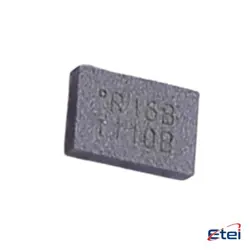
Hình ảnh chỉ để tham khảo
STM32F405VGT6
+BOMIC MCU 32BIT 1MB FLASH 100LQFP
-
Nhà sản xuấtSTMicroelectronics
-
Ông. Phần #STM32F405VGT6
-
Bảng dữ liệu STM32F405VGT6 DataSheet
-
Gói LQFP-100
-
Có sẵn2884
365 Đảm bảo chất lượng ngày
7*24 giờ dịch vụ quarantee
90-Bảo hành sau bán hàng ngày
Bảo hành sản phẩm chính xác
Thông số kỹ thuật
| thuộc tính | Giá trị |
| Package / Case | Tray |
| Series | STM32F4 |
| Part Status | Active |
| Core Processor | ARM® Cortex®-M4 |
| Core Size | 32-Bit Single-Core |
| Speed | 168MHz |
| Connectivity | CANbus, EBI/EMI, I²C, IrDA, LINbus, SPI, UART/USART, USB OTG |
| Peripherals | Brown-out Detect/Reset, DMA, I²S, LCD, POR, PWM, WDT |
| Number of I/O | 82 |
| Program Memory Size | 1MB (1M x 8) |
| Program Memory Type | FLASH |
| RAM Size | 192K x 8 |
| Voltage - Supply (Vcc/Vdd) | 1.8V ~ 3.6V |
| Data Converters | A/D 16x12b; D/A 2x12b |
| Oscillator Type | Internal |
| Operating Temperature | -40°C ~ 85°C (TA) |
| Mounting Type | Surface Mount |
Tổng quan
Description
Key features include:
- 1 MB of Flash memory and 192 KB of SRAM for robust application development.
- A comprehensive set of I/Os and peripherals including USB OTG, CAN, and multiple I2C, SPI, USART interfaces.
- Advanced timers, ADCs, DACs, and a floating-point unit, enhancing its capabilities for complex computations and real-time applications.
- Support for various power-saving modes, making it ideal for battery-powered or energy-efficient projects.
- Extensive development support through ST's STM32Cube ecosystem, which includes firmware libraries and software tools, facilitating fast development and deployment.
The STM32F405VGT6 is widely used in applications such as industrial control, consumer electronics, and IoT devices.
Equivalent
1. STMicroelectronics STM32F407VGT6 A similar STM32 model with slight variations in features.
2. NXP LPC1788: ARM Cortex-M3 microcontroller with comparable specs.
3. Texas Instruments TM4C1294NCPDT: Part of the Tiva C series, similar ARM Cortex-M4.
4. Microchip ATSAM4E16E: ARM Cortex-M4 device, similar performance.
These alternatives offer similar processing capabilities, memory, and peripherals, suitable for various embedded applications.
Features
1. Core: 32-bit ARM Cortex-M4 with DSP instructions, operating at up to 168 MHz.
2. Memory: 1 MB Flash memory and 192 KB SRAM.
3. Connectivity: Multiple interfaces such as USB 2.0 OTG, Ethernet MAC, CAN, and USART.
4. Timers: 17 timers, including general-purpose, basic, and advanced-control timers.
5. Analog: 3 12-bit ADCs, 2 DACs, and 2 operational amplifiers.
6. Digital Interfaces: SPI, I2C, SDIO, and I2S.
7. GPIO: 114 GPIO pins.
8. System: RTC, backup registers, and a microcontroller with power-saving modes.
9. Security: CRC calculation unit and hardware random number generator.
10. Packaging: LQFP-100 package.
These features make the STM32F405VGT6 suitable for applications requiring high processing power, connectivity, and efficient power management.
Pinout
Key Functions and Features:
- Core: ARM Cortex-M4 with FPU, running up to 168 MHz.
- Flash Memory: 1 MB.
- SRAM: 192 KB.
- Timers: 14 timers, including advanced control timers.
- Interfaces:
- USB 2.0 full-speed OTG.
- Ethernet MAC.
- 3x SPI, 3x I2C, 4x USART, 2x UART.
- 2x CAN.
- SDIO.
- ADCs and DACs:
- 3x 12-bit ADCs.
- 2x 12-bit DACs.
- GPIOs: Up to 82 general-purpose I/Os.
- DMA: 16-stream direct memory access controller.
- Other Features:
- RTC, multiple watchdogs, and SysTick timer.
- Cryptographic hardware acceleration.
This microcontroller is suitable for applications requiring efficient processing, connectivity, and peripheral integration, such as in industrial control, communication devices, and consumer electronics.
Manufacturer
Application
1. Industrial Automation: For control systems and robotics due to its high processing power and real-time capabilities.
2. Consumer Electronics: In devices like smart appliances and portable gadgets.
3. IoT Devices: For connectivity and processing tasks in smart home and industrial IoT applications.
4. Automotive: Used in infotainment systems and advanced driver-assistance systems (ADAS).
5. Medical Devices: For portable diagnostic tools and patient monitoring systems.
6. Audio Processing: In digital audio players and sound equipment due to its DSP capabilities.
Its versatility is enhanced by numerous peripherals and communication interfaces.