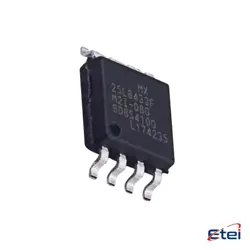
Hình ảnh chỉ để tham khảo
STM32F412ZET6
+BOMIC MCU 32BIT 512KB FLASH 144LQFP
-
Nhà sản xuấtSTMicroelectronics
-
Ông. Phần #STM32F412ZET6
-
Bảng dữ liệu STM32F412ZET6 DataSheet
-
Gói LQFP-144
-
Có sẵn2984
365 Đảm bảo chất lượng ngày
7*24 giờ dịch vụ quarantee
90-Bảo hành sau bán hàng ngày
Bảo hành sản phẩm chính xác
Thông số kỹ thuật
| thuộc tính | Giá trị |
| Package / Case | Tray |
| Series | STM32F4 |
| Part Status | Active |
| Core Processor | ARM® Cortex®-M4 |
| Core Size | 32-Bit Single-Core |
| Speed | 100MHz |
| Connectivity | CANbus, EBI/EMI, I²C, IrDA, LINbus, MMC/SD/SDIO, QSPI, SPI, UART/USART, USB OTG |
| Peripherals | Brown-out Detect/Reset, DMA, I²S, LCD, POR, PWM, WDT |
| Number of I/O | 114 |
| Program Memory Size | 512KB (512K x 8) |
| Program Memory Type | FLASH |
| RAM Size | 256K x 8 |
| Voltage - Supply (Vcc/Vdd) | 1.7V ~ 3.6V |
| Data Converters | A/D 16x12b |
| Oscillator Type | Internal |
| Operating Temperature | -40°C ~ 85°C (TA) |
| Mounting Type | Surface Mount |
Tổng quan
Description
Key features include a rich set of peripherals such as USB OTG, SDIO, SPI, I2C, USART, and a flexible GPIO. Additionally, it supports advanced digital signal processing with its floating-point unit (FPU), making it ideal for applications in audio, motor control, and industrial equipment.
The STM32F412ZET6 also includes low-power modes, making it suitable for battery-powered devices. It supports multiple development environments, including STM32CubeIDE, and is widely used in applications requiring real-time performance, connectivity, and efficient power consumption.
Equivalent
1. NXP's MK66FX1M0VLQ18 from the Kinetis K66 family.
2. Microchip's ATSAME70Q21B from the SAM E70 series.
3. Texas Instruments' TMS320F28379D from the C2000 family.
4. Renesas' R7FS7G27H3A01CFC from the Synergy S7G2 series.
These alternatives offer similar performance, peripherals, and features, catering to applications requiring ARM Cortex-M4 cores. Always check for pin compatibility and specific feature requirements.
Features
- Flash Memory: 512 KB
- SRAM: 256 KB
- GPIOs: 114 I/Os
- Timers: 17, including advanced control, general-purpose, and basic timers
- Communication Interfaces:
- 3x SPI
- 3x I2C
- 4x USART/2x UART
- 1x USB OTG FS
- ADC/DAC:
- 3x 12-bit ADC
- 2x 12-bit DAC
- Digital Filters for Sigma-Delta Modulators (DFSDM)
- Crypto/Hash processor
- RTC with calendar function
- Analog True Random Number Generator (TRNG)
- Low Power Modes: Sleep, Stop, and Standby
- Operating Voltage: 1.7V to 3.6V
- Temperature Range: -40°C to +85°C
- Packages Available: LQFP144
This microcontroller is suitable for applications requiring high performance, rich connectivity, and low power consumption.
Pinout
Key functions and features include:
1. Memory: 512 KB of Flash memory and 128 KB of SRAM.
2. Connectivity:
- Multiple communication interfaces, including USARTs, SPIs, I2Cs, CAN, and USB OTG.
3. Timers:
- General-purpose, basic, and advanced control timers for PWM generation and other timing applications.
4. Analog:
- 12-bit ADCs for analog input and ADC functionalities.
5. Digital Interfaces:
- GPIOs for digital input/output functionalities.
6. Security:
- Features like a true random number generator.
7. Power Management:
- Low power modes for energy-efficient applications.
The STM32F412ZET6 is suitable for various applications requiring high processing power, connectivity, and advanced control features, such as industrial control, consumer electronics, and medical devices.
Manufacturer
Application
1. Consumer Electronics: Smartphones, smartwatches, and wearables for enhanced processing capabilities.
2. Industrial Automation: Control systems and robotics for real-time data processing and control.
3. IoT Devices: Smart home products and connected devices for efficient communication and processing.
4. Medical Devices: Portable medical equipment requiring precise sensing and processing.
5. Audio Applications: Audio processing systems due to its DSP capabilities.
6. Automotive Systems: Infotainment and advanced driver-assistance systems (ADAS) for robust performance and reliability.
These applications leverage its ARM Cortex-M4 core, FPU, and extensive peripheral set.