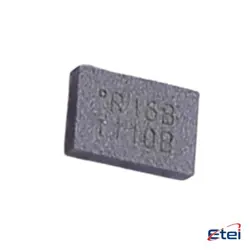
Hình ảnh chỉ để tham khảo
STM32F429IIT6
+BOMIC MCU 32BIT 2MB FLASH 176LQFP
-
Nhà sản xuấtSTMicroelectronics
-
Ông. Phần #STM32F429IIT6
-
Bảng dữ liệu STM32F429IIT6 DataSheet
-
Gói LQFP-176
-
Có sẵn5731
365 Đảm bảo chất lượng ngày
7*24 giờ dịch vụ quarantee
90-Bảo hành sau bán hàng ngày
Bảo hành sản phẩm chính xác
Thông số kỹ thuật
| thuộc tính | Giá trị |
| Package | Tray |
| Series | STM32F4 |
| ProductStatus | Active |
| CoreProcessor | ARM® Cortex®-M4 |
| CoreSize | 32-Bit Single-Core |
| Speed | 180MHz |
| Connectivity | CANbus, EBI/EMI, Ethernet, I²C, IrDA, LINbus, SPI, UART/USART, USB OTG |
| Peripherals | Brown-out Detect/Reset, DMA, I²S, LCD, POR, PWM, WDT |
| NumberofI/O | 140 |
| ProgramMemorySize | 2MB (2M x 8) |
| ProgramMemoryType | FLASH |
| RAMSize | 256K x 8 |
| Voltage-Supply(Vcc/Vdd) | 1.8V ~ 3.6V |
| DataConverters | A/D 24x12b; D/A 2x12b |
| OscillatorType | Internal |
| OperatingTemperature | -40°C ~ 85°C (TA) |
| MountingType | Surface Mount |
| Package/Case | 176-LQFP |
Tổng quan
Description
Key features include multiple communication interfaces such as USART, SPI, I2C, and USB (both host and device), as well as advanced peripherals like the TFT LCD controller, which makes it ideal for graphical applications. The device supports a wide range of peripherals, including timers, ADCs, and DACs, enabling versatile applications in industrial control, medical devices, and consumer electronics.
Additionally, the STM32F429IIT6 supports low-power modes and has a comprehensive set of power management features, making it suitable for battery-powered applications. Its robust ecosystem, including development boards and software tools, facilitates efficient prototyping and development.
Equivalent
1. NXP's MK64FN1M0VLL12 featuring a Cortex-M4 core with similar performance.
2. Texas Instruments' TMS320F28379D, offering comparable processing capabilities.
3. Microchip's ATSAME70Q21, which also has a Cortex-M7 core for higher performance.
4. Renesas' RX71M series, which provides similar capabilities in terms of connectivity and peripherals.
These alternatives depend on specific application requirements like peripherals, memory, and clock speed.
Features
- 2 MB of Flash memory.
- 256 KB of SRAM.
- Advanced connectivity options: multiple I2C, SPI, USART, and USB interfaces.
- Integrated TFT LCD controller supporting displays up to XGA resolution.
- Rich set of peripherals, including timers, ADCs, DACs, and a camera interface.
- DSP instructions and a floating-point unit for efficient computation.
- Extensive GPIO with various operating modes.
- Power efficiency features, with low-power modes and dynamic voltage scaling.
- Cryptographic acceleration for secure applications.
- Embedded real-time clock and temperature sensor.
These features make it suitable for applications in industrial control, consumer electronics, networking, and more, requiring robust performance and connectivity.
Pinout
Key features and functions include:
- Memory: 2 MB Flash memory and 256 KB SRAM, with an external memory interface for connectivity with SDRAM, PSRAM, NOR, and NAND memories.
- Connectivity: Multiple communication interfaces such as USART, SPI, I2C, and CAN, along with USB OTG HS/FS, Ethernet MAC, and an LCD-TFT controller.
- Timers: Up to 17 timers including advanced control, general-purpose, and basic timers.
- Analog Features: 3 12-bit ADCs, 2 DACs, and a temperature sensor.
- GPIO: Up to 140 general-purpose I/Os.
- Other Features: DMA, CRC calculation unit, RTC, and a cryptographic acceleration unit.
The STM32F429IIT6 is suitable for a wide range of applications, including industrial control, consumer electronics, and automotive systems, due to its rich feature set and robust performance.
Manufacturer
Application
1. Industrial Automation: For control systems, real-time data processing, and communication.
2. Consumer Electronics: Used in smart appliances, multimedia devices, and advanced user interfaces.
3. Medical Devices: Suitable for patient monitoring systems and diagnostic equipment.
4. Automotive Systems: Applied in infotainment systems, dashboard control, and telematics.
5. IoT Devices: Facilitates connectivity and control in smart homes and wearable technology.
6. Embedded Systems: Used in robotics and complex embedded applications requiring high performance.
Its features like high-speed connectivity, large memory, and graphical processing capabilities make it versatile for various applications.