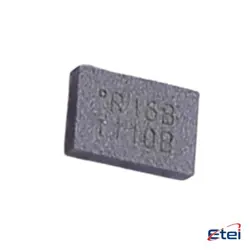
Hình ảnh chỉ để tham khảo
TC74VHC244FT
+BOMBuffers & Line Drivers
-
Nhà sản xuấtToshiba
-
Ông. Phần #TC74VHC244FT
-
Bảng dữ liệu TC74VHC244FT DataSheet
-
Có sẵn12428
365 Đảm bảo chất lượng ngày
7*24 giờ dịch vụ quarantee
90-Bảo hành sau bán hàng ngày
Bảo hành sản phẩm chính xác
Thông số kỹ thuật
| thuộc tính | Giá trị |
| Standard Pack Qty | 2000 |
Tổng quan
Description
The TC74VHC244FT operates over a wide voltage range, typically from 2.0V to 5.5V, making it suitable for use in both 3.3V and 5V systems. Its high-speed performance ensures fast signal processing, with propagation delays significantly lower than those of standard CMOS logic ICs. Additionally, the 3-state outputs allow the device to be used in bus-oriented systems, where multiple devices can share the same data lines.
The compact size and efficient design of the TC74VHC244FT make it ideal for applications in computing, communications, and other electronics where space and power efficiency are critical.
Equivalent
Features
1. Technology: It utilizes advanced Silicon Gate CMOS technology.
2. Voltage Range: Operates within a supply voltage range of 2V to 5.5V.
3. High Speed: Offers fast propagation delay with typical values of 3.7 ns at 5V.
4. Low Power Consumption: Due to CMOS technology, it has low power dissipation.
5. 3-State Outputs: Features enable inputs to control the output states, allowing ease of bus interfacing.
6. Output Drive Capability: Can drive up to 6mA at 5V, supporting TTL loads.
7. Input Levels: Compatible with TTL input levels at 5V supply voltage.
8. Pin Configuration: Available in a 20-pin TSSOP package.
9. Temperature Range: Operates in a wide temperature range from -40°C to 85°C.
10. Hysteresis: Provides noise immunity with hysteresis at inputs, ensuring stable operation.
These features make the TC74VHC244FT suitable for various digital logic applications requiring high speed and low power consumption.
Pinout
Manufacturer
Application
1. Digital data bus systems: Enhances signal integrity and drive capability.
2. Memory systems: Assists in memory address driving and data buffering.
3. Peripheral interfacing: Connects microcontrollers or processors to peripherals.
4. Communication systems: Facilitates signal boosting and noise reduction in communication interfaces.
5. FPGA and microcontroller systems: Used for signal routing and buffering in complex digital circuits.
Its high-speed operation and low power consumption make it suitable for consumer electronics, computing, and networking applications.