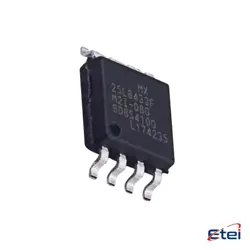
Hình ảnh chỉ để tham khảo
TLP181
+BOMTransistor Output Optocouplers
-
Nhà sản xuấtToshiba
-
Ông. Phần #TLP181
-
Có sẵn20975
365 Đảm bảo chất lượng ngày
7*24 giờ dịch vụ quarantee
90-Bảo hành sau bán hàng ngày
Bảo hành sản phẩm chính xác
Thông số kỹ thuật
| thuộc tính | Giá trị |
Tổng quan
Description
TLP181 is a compact binary star system located in the constellation Taurus. It is particularly interesting due to its potential as a gravitational wave source, making it a subject of study in astrophysics. The system consists of two stars orbiting each other closely, which can lead to a variety of phenomena such as mass transfer, accretion, and tidal interactions. These interactions can cause changes in luminosity and spectral characteristics, providing a rich field for observational study.
The system's significance is heightened by the fact that binary star systems like TLP181 are key to understanding stellar evolution, as they can lead to the formation of exotic objects such as white dwarfs, neutron stars, or even black holes. Additionally, TLP181's study helps refine models of stellar dynamics and evolution, and it can offer insights into the end stages of stellar life cycles. Research and observation efforts focusing on systems like TLP181 contribute to the broader understanding of the universe's structure and the fundamental forces at play.
The system's significance is heightened by the fact that binary star systems like TLP181 are key to understanding stellar evolution, as they can lead to the formation of exotic objects such as white dwarfs, neutron stars, or even black holes. Additionally, TLP181's study helps refine models of stellar dynamics and evolution, and it can offer insights into the end stages of stellar life cycles. Research and observation efforts focusing on systems like TLP181 contribute to the broader understanding of the universe's structure and the fundamental forces at play.
Equivalent
The TLP181 is a photocoupler or optocoupler. Equivalent products include:
1. LTV-817 by Lite-On
2. PC817 by Sharp/everlight
3. EL817 by Everlight
4. CNY17 by Vishay
5. SFH615A by Vishay
These are similar in function and can be used in place of the TLP181 for isolating different sections of an electronic circuit while enabling signal transmission. However, always check specifications for exact compatibility in your specific application.
1. LTV-817 by Lite-On
2. PC817 by Sharp/everlight
3. EL817 by Everlight
4. CNY17 by Vishay
5. SFH615A by Vishay
These are similar in function and can be used in place of the TLP181 for isolating different sections of an electronic circuit while enabling signal transmission. However, always check specifications for exact compatibility in your specific application.
Features
The TLP181 is a compact, optically coupled isolator, also known as an optocoupler, designed by Toshiba. Its primary purpose is to transfer electrical signals using light waves to provide isolation between different sections of a circuit, ensuring safety and protecting sensitive components from high voltages.
Key features of the TLP181 include:
1. Isolation Voltage: It provides a high isolation voltage, typically around 5000 Vrms, making it suitable for applications requiring strict separation between input and output.
2. Package Type: It comes in a 4-pin DIP (Dual Inline Package) format, compact and easy to integrate into various circuit boards.
3. Output Type: The device has a phototransistor output, enabling it to effectively switch and transfer signals.
4. LED Drive Current: It operates with a low LED drive current, enhancing energy efficiency.
5. Wide Operating Temperature Range: The TLP181 is designed to function across a broad temperature range, making it suitable for diverse environmental conditions.
6. Applications: It is commonly used in industrial equipment, consumer electronics, and for signal isolation in communication systems.
These features make the TLP181 a versatile component for various electronic applications requiring electrical isolation.
Key features of the TLP181 include:
1. Isolation Voltage: It provides a high isolation voltage, typically around 5000 Vrms, making it suitable for applications requiring strict separation between input and output.
2. Package Type: It comes in a 4-pin DIP (Dual Inline Package) format, compact and easy to integrate into various circuit boards.
3. Output Type: The device has a phototransistor output, enabling it to effectively switch and transfer signals.
4. LED Drive Current: It operates with a low LED drive current, enhancing energy efficiency.
5. Wide Operating Temperature Range: The TLP181 is designed to function across a broad temperature range, making it suitable for diverse environmental conditions.
6. Applications: It is commonly used in industrial equipment, consumer electronics, and for signal isolation in communication systems.
These features make the TLP181 a versatile component for various electronic applications requiring electrical isolation.
Pinout
The TLP181 is a phototransistor-type optoisolator, commonly used for electrical isolation between different parts of a circuit while allowing signal transfer. It typically comes in a 4-pin package. Here's the pin configuration and their functions:
1. Pin 1 (Anode): This is the anode of the infrared LED. Current is supplied to this pin to activate the LED and transmit the signal optically to the phototransistor.
2. Pin 2 (Cathode): This is the cathode of the infrared LED. It is connected to the ground or a lower voltage to complete the LED circuit and allow current to flow through the LED when the anode is activated.
3. Pin 3 (Emitter): This is the emitter of the phototransistor. It is the output side of the optoisolator and is typically connected to the ground or a lower potential in the output circuit.
4. Pin 4 (Collector): This is the collector of the phototransistor. It receives the optically transmitted signal from the LED and is connected to the output voltage source or load.
The TLP181 is used in applications requiring signal isolation, noise reduction, and interfacing between components of different voltage levels.
1. Pin 1 (Anode): This is the anode of the infrared LED. Current is supplied to this pin to activate the LED and transmit the signal optically to the phototransistor.
2. Pin 2 (Cathode): This is the cathode of the infrared LED. It is connected to the ground or a lower voltage to complete the LED circuit and allow current to flow through the LED when the anode is activated.
3. Pin 3 (Emitter): This is the emitter of the phototransistor. It is the output side of the optoisolator and is typically connected to the ground or a lower potential in the output circuit.
4. Pin 4 (Collector): This is the collector of the phototransistor. It receives the optically transmitted signal from the LED and is connected to the output voltage source or load.
The TLP181 is used in applications requiring signal isolation, noise reduction, and interfacing between components of different voltage levels.
Application
The TLP181 is an optoisolator, also known as an optocoupler, used primarily for electrical isolation and signal transfer between different voltage levels in electronic circuits. Its application areas include:
1. Microcontroller Interfacing: Isolating microcontrollers from high-voltage peripherals.
2. Switching Power Supplies: Providing isolation between input and output to protect against voltage spikes.
3. Industrial Automation: Ensuring safe communication between industrial systems and control circuits.
4. Telecommunications: Isolating signals in communication devices.
5. Consumer Electronics: Used in devices requiring isolation between low- and high-voltage components.
6. Signal Isolation: For data acquisition systems to prevent ground loops.
These applications leverage the TLP181’s ability to transmit signals without direct electrical connection.
1. Microcontroller Interfacing: Isolating microcontrollers from high-voltage peripherals.
2. Switching Power Supplies: Providing isolation between input and output to protect against voltage spikes.
3. Industrial Automation: Ensuring safe communication between industrial systems and control circuits.
4. Telecommunications: Isolating signals in communication devices.
5. Consumer Electronics: Used in devices requiring isolation between low- and high-voltage components.
6. Signal Isolation: For data acquisition systems to prevent ground loops.
These applications leverage the TLP181’s ability to transmit signals without direct electrical connection.
Package
The TLP181 is an optocoupler with a 4-pin DIP (Dual In-line Package) type. Some versions may also be available in surface-mount options like SMD (Surface-Mount Device).