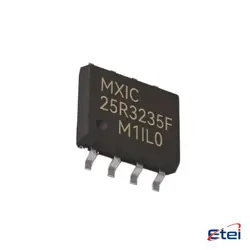
Hình ảnh chỉ để tham khảo
LSF0204DPWR
+BOMIC TRNSLTR BIDIRECTIONAL 14TSSOP
-
Nhà sản xuấtTexas Dụng cụ
-
Ông. Phần #LSF0204DPWR
-
Gói TSSOP (PW)-14
-
Có sẵn3754
365 Đảm bảo chất lượng ngày
7*24 giờ dịch vụ quarantee
90-Bảo hành sau bán hàng ngày
Bảo hành sản phẩm chính xác
Thông số kỹ thuật
| thuộc tính | Giá trị |
| Package | Tape & Reel (TR),Cut Tape (CT),Bulk |
| ProductStatus | Active |
| TranslatorType | Voltage Level |
| ChannelType | Bidirectional |
| NumberofCircuits | 1 |
| ChannelsperCircuit | 4 |
| Voltage-VCCA | 0.8 V ~ 4.5 V |
| Voltage-VCCB | 1.8 V ~ 5.5 V |
| OutputType | Open Drain, Push-Pull |
| DataRate | 100MHz |
| OperatingTemperature | -40°C ~ 125°C (TA) |
| Features | Auto-Direction Sensing |
| MountingType | Surface Mount |
| Package/Case | 14-TSSOP (0.173, 4.40mm Width) |
Tổng quan
Description
The LSF0204DPWR is designed to handle low-voltage applications, making it suitable for portable and battery-operated devices. It typically features low on-resistance, enabling efficient power usage and minimal power loss. Additionally, it often includes protection features such as current limiting, thermal shutdown, and undervoltage lockout to ensure safe operation under various conditions.
This component is typically packaged in a small form factor, allowing for compact circuit designs. Its integration into electronic systems simplifies the design process, as it combines several power management functions into a single component, reducing the need for multiple discrete components. This makes it an appealing choice for designers aiming to optimize space and energy efficiency in their products.
Equivalent
1. NXP's NVT2008: Similar bidirectional level translator.
2. ON Semiconductor's NLSX4373: Offers voltage translation capabilities.
3. Microchip's TXS0108E: 8-bit bidirectional voltage-level translator.
4. Fairchild's FXLA104: 4-bit bidirectional level translator.
Ensure these alternatives meet your specific application's technical requirements before substituting.
Features
1. Voltage Range: It supports translation between 1.0 V to 4.5 V on the low side and 1.8 V to 5.5 V on the high side.
2. Channels: The device features four independent channels, allowing for multiple signals to be translated simultaneously.
3. Automatic Direction Sensing: It can automatically handle the direction of data flow without needing a direction control pin.
4. High-Speed Data Transfer: The LSF0204DPWR supports high-speed data rates, suitable for applications like I²C, SPI, and UART.
5. Low Propagation Delay: The device ensures minimal signal delay, which is crucial for maintaining timing accuracy in high-speed applications.
6. Small Package: It comes in a compact DPW package, ideal for space-constrained designs.
7. Low Power Consumption: It is designed for efficient operation with minimal power usage, making it suitable for battery-powered devices.
8. ESD Protection: The device is equipped with Electrostatic Discharge (ESD) protection, enhancing its reliability.
These features make the LSF0204DPWR suitable for a wide range of level-shifting applications in various electronic devices.
Pinout
The LSF0204DPWR comes in a TSSOP-14 package, meaning it has 14 pins. The primary function of this IC is to enable communication between devices with different I/O voltage levels, ranging from 1.0V to 4.5V. It achieves this by using a passive switch architecture that allows signals to pass in both directions.
The device has four channels, meaning it can translate up to four different signal lines simultaneously. It is often used in I2C, SMBus, and other multi-voltage digital interface applications. The IC does not require a direction control signal, which simplifies its integration into systems.
For more detailed specifications, it is recommended to consult the datasheet from Texas Instruments.
Manufacturer
Application
1. Mobile and battery-powered devices, ensuring efficient communication between components operating at different voltage levels.
2. Communication and networking equipment, where it helps in managing different logic levels.
3. Consumer electronics, such as TVs and gaming consoles, to ensure compatibility between various ICs.
4. Industrial automation systems, for seamless integration of sensors and microcontrollers with different voltage requirements.
5. Computing systems, allowing for proper interfacing between legacy and modern components.