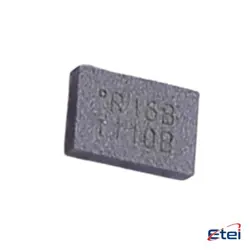
Hình ảnh chỉ để tham khảo
MK20DX64VFM5
+BOMIC MCU 32BIT 64KB FLASH 32QFN
-
Nhà sản xuấtNXP Hoa Kỳ Inc.
-
Ông. Phần #MK20DX64VFM5
-
Bảng dữ liệu MK20DX64VFM5 DataSheet
-
Gói QFN-32
-
Có sẵn7555
365 Đảm bảo chất lượng ngày
7*24 giờ dịch vụ quarantee
90-Bảo hành sau bán hàng ngày
Bảo hành sản phẩm chính xác
Thông số kỹ thuật
| thuộc tính | Giá trị |
| Package | Tray |
| Series | Kinetis K20 |
| ProductStatus | Active |
| CoreProcessor | ARM® Cortex®-M4 |
| CoreSize | 32-Bit Single-Core |
| Speed | 50MHz |
| Connectivity | I²C, IrDA, SPI, UART/USART, USB, USB OTG |
| Peripherals | DMA, I²S, LVD, POR, PWM, WDT |
| NumberofI/O | 20 |
| ProgramMemorySize | 64KB (64K x 8) |
| ProgramMemoryType | FLASH |
| EEPROMSize | 2K x 8 |
| RAMSize | 16K x 8 |
| Voltage-Supply(Vcc/Vdd) | 1.71V ~ 3.6V |
| DataConverters | A/D 6x16b |
| OscillatorType | Internal |
| OperatingTemperature | -40°C ~ 105°C (TA) |
| MountingType | Surface Mount, Wettable Flank |
| Package/Case | 32-VFQFN Exposed Pad |
Tổng quan
Description
Key features include 64KB of Flash memory, 8KB of SRAM, and various on-chip peripherals, such as UART, SPI, I2C, and ADCs, making it versatile for different embedded applications. The device supports multiple low-power modes, catering to energy-efficient designs. Its package, VFQFN-32, is compact, making it suitable for space-constrained applications.
The MK20DX64VFM5 is typically used in consumer electronics, industrial control, and IoT devices, where reliable performance is essential. Its community support and extensive documentation make it accessible for both seasoned engineers and hobbyists.
Equivalent
1. STM32F103 series from STMicroelectronics
2. AT32F403 series from Artery Technology
3. ATSAM3X8E from Microchip Technology
4. LPC1768 from NXP
These alternatives offer comparable features like ARM Cortex-M cores, similar memory sizes, and peripheral sets. Always verify pin compatibility and specific feature requirements for direct replacements.
Features
1. Core and Performance: It features a 32-bit ARM Cortex-M4 core with performance capabilities up to 50 MHz.
2. Memory: It includes 64 KB of Flash memory and 16 KB of SRAM, providing ample space for code and data storage.
3. I/O and Connectivity: The microcontroller offers a variety of communication interfaces, including I2C, SPI, UART, and USB 2.0 full-speed capabilities. It also supports up to 50 general-purpose I/O pins.
4. Timers and PWM: It features multiple timers, PWM functions, and an RTC (Real-Time Clock), suitable for time-sensitive applications.
5. Analog Features: Includes a 16-bit ADC (Analog-to-Digital Converter) and a 12-bit DAC (Digital-to-Analog Converter) for handling analog signals.
6. Security: The device includes security features like a hardware random number generator and tamper detection.
7. Low Power: It is designed for low-power applications, including flexible low-power modes to extend battery life.
These features make it suitable for a variety of embedded applications, from consumer electronics to industrial control systems.
Pinout
Key functions and features of the MK20DX64VFM5 include:
1. Core: ARM Cortex-M4 processor, which offers efficient performance and powerful computation capabilities.
2. Flash Memory: Typically 64 KB of flash memory, which provides storage for program code.
3. RAM: Includes 8 KB of RAM for data processing and variable storage.
4. Peripherals: Various integrated peripherals such as GPIO, UARTs, I2C, SPI, ADC, DAC, and timers, which allow for diverse interfacing options with external components and systems.
5. Clock Speed: Operates at a frequency of up to 50 MHz, providing adequate processing speed for a range of applications.
These features make the MK20DX64VFM5 suitable for embedded applications requiring moderate performance and a variety of peripheral connectivity options.
Manufacturer
Application
1. Consumer Electronics: For devices like portable media players and smart appliances.
2. Industrial Automation: In control systems, human-machine interfaces (HMIs), and robotics.
3. Automotive: Applications such as infotainment systems and advanced driver-assistance systems (ADAS).
4. Internet of Things (IoT): As a controller in IoT nodes and gateways due to its connectivity options.
5. Medical Devices: For handheld medical instruments and monitoring systems.
6. Smart Energy: In metering and energy management systems.
Its features like low power consumption, robust connectivity, and high performance make it versatile for embedded applications.